Category:
Book ReviewsFairy Tale Review: King's Most Divisive Work
Prices can sometimes be lower on bigger marketplaces, but this link helps independent bookstores and local reading communities.
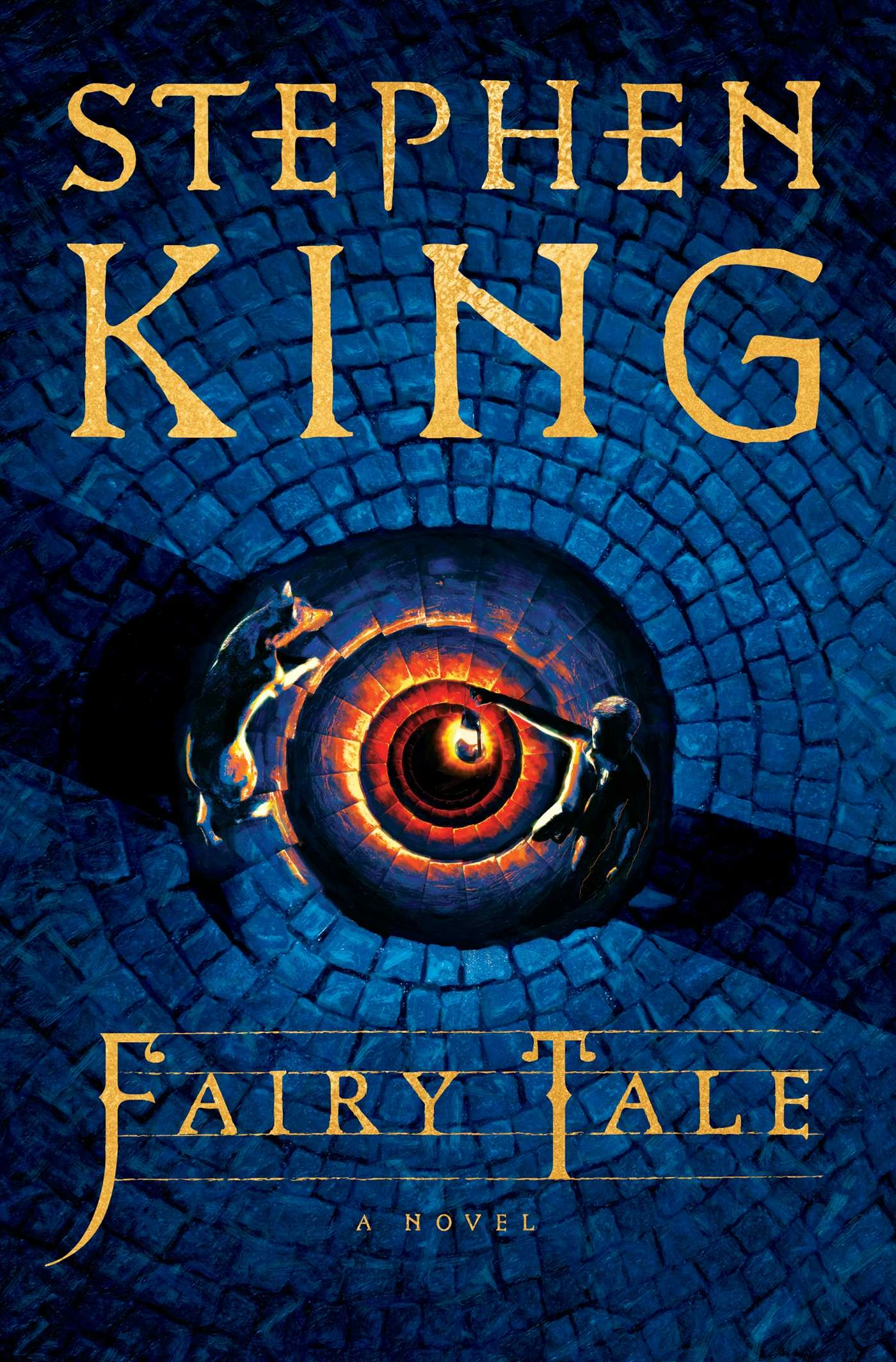
Stephen King's Fairy Tale arrives as a curious anomaly in the legendary author's catalog—a book that splits readers almost down the middle between those who find it serviceable and those who consider it a rare misstep. Published in 2022, this 605-page fantasy adventure inherits the bones of King's best work but struggles to flesh them out into something transcendent. The core problem isn't that Fairy Tale is bad; it's that it's aggressively, frustratingly adequate.
What You're Actually Getting
Charlie Reade is seventeen, burdened by his mother's death and his father's alcoholism. When he befriends Howard Bowditch, a reclusive old man living in a grand house on a hill, Charlie's life takes an unexpected turn. After Bowditch's death, Charlie inherits the house, a fortune in gold, and—most importantly—a locked shed containing a portal to another world. That parallel universe is drowning in darkness, ruled by an entity called the Fair One, and somehow Charlie has become responsible for saving it.
The premise alone should sing. It's the kind of high-concept setup that defines King's best work—ordinary person thrust into extraordinary circumstances, forced to become a hero whether they're ready or not. The opening third delivers exactly this. The relationship between Charlie and Bowditch crackles with genuine warmth and tension. King's ear for dialogue, that supernatural ability to make mundane conversations feel weighted with meaning, is firing on all cylinders. This is King doing what King does best: making you care about a kid and an old man before the fantasy elements ever arrive.
Then the fantasy elements arrive, and something fundamental shifts.
The Two-Book Problem
Stephen King's Fairy Tale review reveals a structural flaw that haunts the entire narrative: it reads like two separate stories awkwardly grafted together. The first book—a quiet, character-driven story about grief, responsibility, and the unexpected bonds we forge with strangers—is genuinely moving. The second book—a generic dark fantasy adventure featuring a chosen one, an evil empire, dungeons, and a Lovecraftian final boss—is where things derail.
Once Charlie crosses the portal, the magic doesn't deepen; it flattens. The parallel world, despite its dual moons and towering palaces, feels derivative. We've seen this before in countless fantasy narratives: exiled royalty, magical tournaments where people fight to the death for entertainment, an oppressive regime awaiting its destined hero. King isn't reinventing the wheel here—he's retreading well-worn tracks without adding anything that makes the journey feel essential.
The pacing becomes the book's second critical failure. King spends roughly 200 pages building atmosphere and character, then another 400 pages working through a fairly predictable fantasy plot. Readers report reaching the 82% mark and realizing they genuinely don't care how the story ends. That's not boredom, exactly. It's indifference—and King himself would agree that indifference is worse than outright anger. A reader who hates your book is still engaged. A reader who doesn't care has already checked out.
Where It Works (and Where It Doesn't)
The early sections showcase King's mastery of mundane horror. The scratching sounds from the locked shed, the gradual revelation of Bowditch's past, the way Charlie's life slowly becomes consumed by his caretaking duties—these moments have teeth. King understands that the scariest things often whisper before they roar.
The dialogue remains sharp throughout. Charlie's voice feels authentically seventeen—not too young, not trying too hard to sound like an adult. His interactions with Bowditch have weight because King takes time to develop them. The cassette tape containing Bowditch's story is a clever narrative device that could have elevated the entire book.
But once the fantasy world takes center stage, King's greatest strengths become liabilities. His gift for character development and psychological realism doesn't translate to high fantasy. The Fair One, despite its Lovecraftian trappings, never becomes truly menacing. The magic system feels underdeveloped. The stakes, which should feel cosmic and urgent, instead feel obligatory—like King is checking boxes on a fantasy adventure checklist rather than exploring something that genuinely fascinates him.
The ending compounds these problems. After hundreds of pages of buildup and foreshadowing, the climax lands with a whimper. There's no twist that recontextualizes what came before, no revelation that deepens the themes, no payoff that justifies the considerable time investment. The book simply ends, having delivered exactly what it promised on the tin: a fairytale adventure, and nothing more.
Who Should Actually Read This
If you're a Stephen King completist, you'll read Fairy Tale regardless of this review. It's not his worst work—that distinction belongs to books that are actively unpleasant to read. This is merely his most forgettable recent novel.
If you're new to King, don't start here. Try The Shining, Misery, or The Stand instead. Those books demonstrate why King became a household name. They show what happens when his gifts for character, atmosphere, and pacing align with a story that justifies its length.
If you're looking for King doing dark fantasy, read The Talisman (co-written with Peter Straub) instead. That book manages what Fairy Tale attempts but fails to achieve: it balances intimate character work with genuinely epic fantasy adventure. It has scope without sacrificing soul.
That said, if you enjoy pure escapism and don't mind familiar fantasy tropes, Fairy Tale might work for you. It's readable. It's not offensive. It's just not particularly memorable or rewarding. Some readers will find the parallel world charming despite its derivativeness. Some will appreciate the slower pacing as a respite from modern thriller culture. But they'll likely be in the minority.
The Bigger Picture
What makes Stephen King's Fairy Tale frustrating isn't its failure—it's how close it comes to success before veering off course. The DNA of something genuinely great exists in those opening chapters. A book about grief, aging, responsibility, and the ways we save each other could have been extraordinary. Instead, King apparently felt obligated to deliver a fantasy adventure, and the result is a book that satisfies neither impulse fully.
This is the problem with writing at King's prolific pace (he's published over 60 novels). Not every project gets the full weight of his attention and revision. Fairy Tale reads like a first draft that needed another pass, another round of cuts, another honest conversation with an editor about whether the fantasy sequences were actually working.
King's strengths—dialogue, character development, psychological insight, the ability to make the mundane feel weighted with dread—are largely wasted in a fantasy setting that doesn't require them. His weaknesses—occasionally generic worldbuilding, plot structures that can feel formulaic—are thrown into sharp relief when he's working in a genre that demands more inventiveness.
Final Verdict
Is Fairy Tale worth reading? Only if you have specific reasons to do so. If you're a King devotee, you'll read it and find it acceptable but unremarkable. If you're looking for great dark fantasy, you'll find better options. If you're looking for King at his best, look elsewhere entirely.
The book isn't a disaster. It's readable, occasionally moving, and competently executed. But competence isn't enough when you're Stephen King. Readers expect more than adequate. They expect transcendence, or at least genuine originality. Fairy Tale delivers neither. It's a book that will fade from memory faster than most King novels, a rare stumble from a writer who has earned the right to take risks but instead chose the safe route.
Rating: 5.5/10 — Competent but forgettable; King on autopilot rather than inspiration.