Category:
Book ReviewsEverybody's Favorite Guy Review: Too Short for Its Own Good
Prices can sometimes be lower on bigger marketplaces, but this link helps independent bookstores and local reading communities.
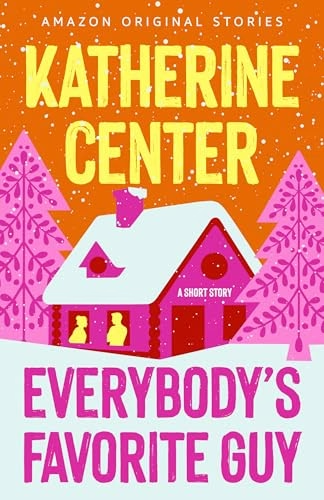
Katherine Center's Everybody's Favorite Guy is a bittersweet romantic novella that attempts to pack genuine emotional depth into just 51 pages—and the results are frustratingly mixed. This Amazon Original tells the story of Lily and Walker, childhood best friends whose seven-year estrangement ends when they're snowed in together at a family cabin in the Colorado Rockies. Center manages to weave surprising complexity into this forced-proximity romance, particularly around themes of grief and unresolved trauma, but the brevity of the format ultimately works against the story's emotional payoff.
What It's About
Lily arrives in Denver expecting to avoid Walker entirely at a family reunion. Instead, she literally runs into him at baggage claim, and when a sudden snowstorm traps them at a remote cabin with no power, they're forced to confront seven years of unresolved feelings. What begins as awkward small talk evolves into deeper conversations about why Walker rejected Lily in high school—a decision rooted in something far more complicated than either of them initially admits.
The setup is classic second-chance romance territory: forced proximity, shared history, a cozy fire, and the kind of vulnerability that only emerges when the outside world disappears. Center leans into this formula deliberately, but the novella's real strength lies in its exploration of how grief shapes our relationships and the choices we make to protect the people we love.
The Problem: Format Constraints That Strangle Potential
Here's the central tension with Everybody's Favorite Guy: it reads like a full novel compressed into novella form, and that compression creates a narrative that feels simultaneously rushed and incomplete. Readers consistently note the same frustration—they wanted more. More banter between Lily and Walker. More build-up of their chemistry. More breathing room for the emotional beats to land.
This isn't a flaw in Center's writing ability; it's a structural limitation that becomes impossible to ignore. The 51-page format demands that she move quickly through exposition and character development, leaving readers feeling like they've watched a highlight reel rather than experienced a full story. For fans of Center's longer works, this feels particularly unsatisfying. You get a taste of her ability to craft meaningful moments and complex characters, then the story ends just as you're settling in.
What Actually Works
Despite its brevity, Everybody's Favorite Guy contains moments of genuine literary merit. Center's handling of grief—particularly one extended passage about neurons searching for people who are no longer there—demonstrates why she's earned her devoted readership. This isn't Hallmark sentimentality; it's the kind of precise emotional observation that makes you pause mid-read.
The revelation about Walker's past cruelty and the complicated moral weight of his choices adds unexpected darkness to what could have been a lightweight rom-com. When Lily and Walker finally discuss why he rejected her, the conversation carries real stakes. Center doesn't let either character off easy, and she doesn't pretend that attraction and nostalgia automatically erase past hurt. That moral complexity elevates the novella beyond typical second-chance romance tropes.
The forced-proximity elements—the snowed-in cabin, a prowling bear, a ride in an open-air gondola—work as narrative engines without feeling contrived. Center uses these scenarios to strip away social armor and force genuine vulnerability.
Where It Falls Flat
Several readers flagged the novella's setting details as careless. The timeline places the story in March in the Colorado Rockies, yet the narrative includes characters tubing in bathing suits and weather that conveniently shifts from warm to catastrophic snowstorm overnight. For readers familiar with Colorado's actual climate patterns, these details pull you out of the story entirely. It's the kind of oversight that suggests Center prioritized romantic convenience over geographical authenticity.
The tone occasionally veers into territory that feels immature for Center's typically sophisticated voice. Some readers described it as YA-adjacent, which may appeal to younger audiences but feels tonally inconsistent with Center's established body of work. The ending, while satisfying, borders on Hallmark-movie predictability—a criticism that lands harder precisely because Center is capable of more nuance.
There's also the matter of the audiobook narration. One narrator's robotic delivery reportedly undermined the emotional intimacy the story depends on, suggesting that format choice matters significantly here.
Who Should Read This—And Who Won't
Perfect for: Katherine Center fans with lower expectations, readers who love second-chance romance and forced-proximity scenarios, anyone seeking a quick emotional read that can be consumed in an evening, and those with Amazon Prime (since it's available free through that service).
Will disappoint: Readers expecting a full-length Center novel, anyone seeking deep character development and extended romance build-up, people who value geographical accuracy in their settings, and those fatigued by Hallmark-adjacent rom-com endings.
The Verdict on Whether It's Worth Reading
Everybody's Favorite Guy is worth reading if you approach it with realistic expectations about its format limitations. It's not worth reading if you're hoping for the emotional depth and character complexity that Center delivers in her longer works. The novella functions best as a palate cleanser—a quick, relatively painless way to spend an evening—rather than as a meaningful addition to Center's catalog.
The book's 3.57 rating reflects genuine reader division: some found it charming and touching, while others felt cheated by its brevity and lightweight execution. That polarization is telling. Center's name carries enough weight that readers expected more substance. The novella delivers moments of genuine insight but not enough of them to justify the setup.
Final Score: 6/10
A competent but underutilized exploration of grief and second chances that proves even Katherine Center's talent can't overcome the constraints of a 51-page format.