Category:
Book ReviewsEmpire of the Vampire Review: Dark, Brutal, Unapologetically Mature
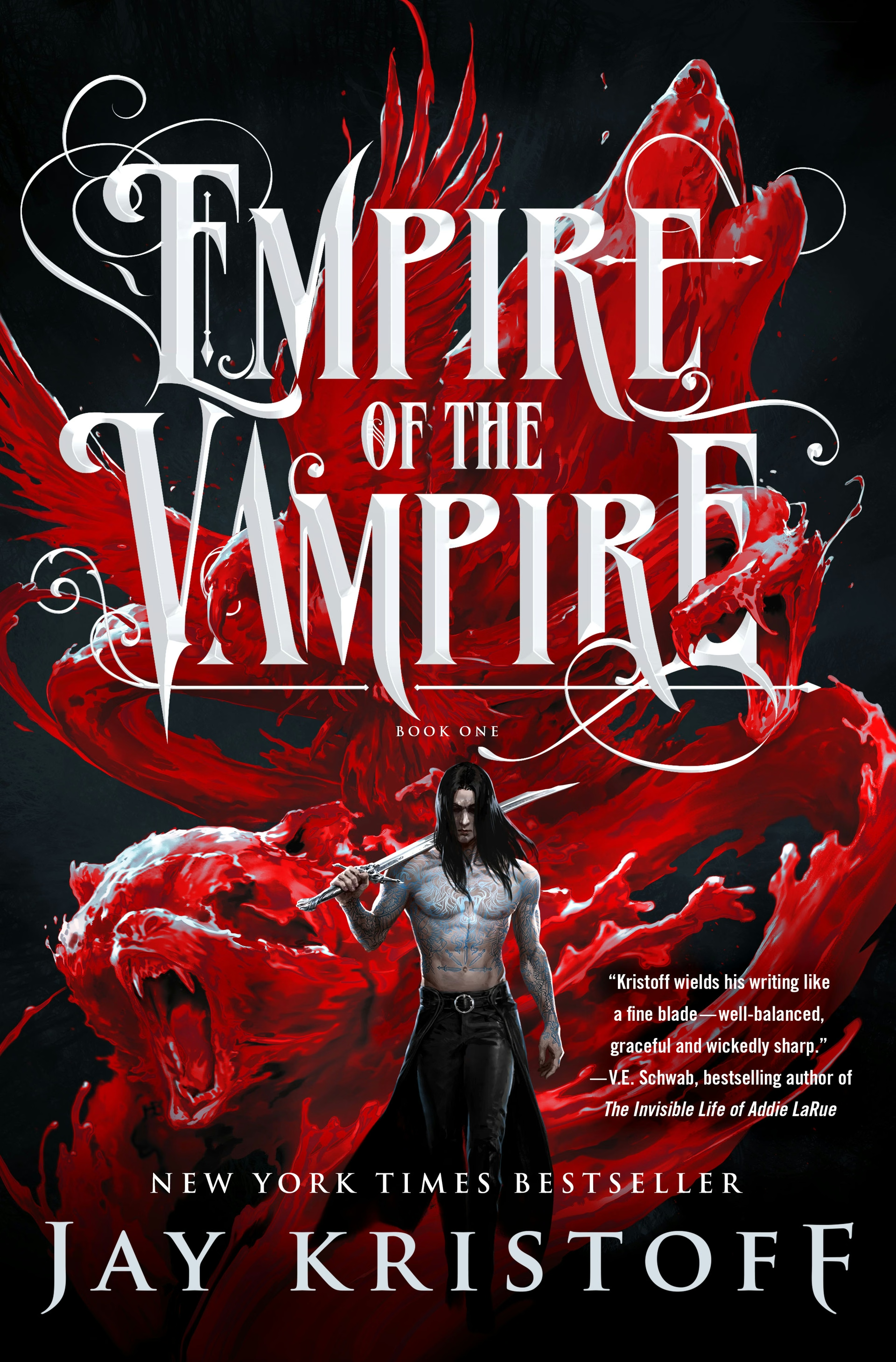
Prices can sometimes be lower on bigger marketplaces, but this link helps independent bookstores and local reading communities.
Jay Kristoff's Empire of the Vampire is not your typical dark fantasy. This is a 879-page behemoth that announces itself with blood-soaked violence, explicit sexuality, and a protagonist so morally compromised he makes most anti-heroes look like choirboys. It's the kind of book that demands you know exactly what you're signing up for—and that's precisely why it works.
The premise is deceptively simple: twenty-seven years of eternal darkness. Vampires have won. Humanity is nearly extinct. Gabriel de León, the last silversaint of a holy order dedicated to hunting the undead, is imprisoned and forced to recount how the world fell. But calling Empire of the Vampire a vampire story undersells what Kristoff has actually created here.
What It's About
Gabriel's narrative weaves together multiple timelines—his training as a silversaint, the catastrophic wars that led to eternal night, forbidden romance, and the desperate quest for humanity's last hope: the Holy Grail. The book functions as both coming-of-age tale and apocalyptic saga, grounded in a protagonist who has survived long enough to become cynical, broken, and dangerously unreliable as a narrator.
The worldbuilding is meticulous. Kristoff constructs a fully realized dark fantasy setting with its own mythology, political factions, and theological complexity. This isn't a thin premise stretched across 879 pages—there's genuine depth to explore, multiple mysteries that unfold gradually, and enough worldbuilding detail to sustain a multi-book series.
Writing & Style: Visceral and Uncompromising
Kristoff's prose is deliberately provocative. Sentences are sharp and often brutal. He doesn't flinch from depicting violence in graphic detail—combat scenes are described with anatomical precision that makes you feel every wound. The same unflinching approach applies to sexuality; there are explicit scenes woven throughout, including the infamous blood-drinking blowjob that's become shorthand for the book's willingness to transgress.
The illustrated edition deserves special mention. The black-and-white artwork enhances the gothic atmosphere without overwhelming the prose. These aren't mere decorative flourishes—they function as visual punctuation to key moments, deepening the immersion.
The narrative voice is unreliable in the best way. Gabriel is a drunk, traumatized survivor telling his story under duress. You're never entirely sure what's truth, embellishment, or self-serving mythology. This creates a fascinating tension: you're reading a confession from someone with every reason to lie.
What Works Brilliantly
The vampire mythology reimagined. These aren't romantic creatures or sparkly misunderstood beings. They're apex predators—intelligent, organized, and utterly evil. They see humans as food and resources. There's no redemption arc, no hidden nobility. This clarity about what vampires are makes them genuinely threatening in a way that feels fresh against decades of vampire romanticism.
Character complexity. Gabriel isn't likable, but he's fascinating. His contradictions feel earned rather than performative. Supporting characters—mentors, lovers, rivals—are equally layered. The book trusts readers to engage with morally gray people without needing a redemption arc.
Pacing despite the length. At nearly 900 pages, this could easily drag. Instead, Kristoff maintains momentum through escalating stakes, revealed mysteries, and genuine surprises. The structure of Gabriel telling his story while imprisoned creates natural dramatic tension.
Multi-layered storytelling. The book functions simultaneously as military fantasy, romance, theological exploration, and revenge narrative. It doesn't reduce to a single genre—it sprawls across them deliberately.
What Doesn't Land as Well
The length can feel indulgent. Some sequences, particularly in the middle section, linger longer than necessary. Not every scene earns its page count, and readers seeking tighter plotting may find themselves skimming.
The romance subplot, while compelling, occasionally overwhelms the larger narrative. When the focus shifts entirely to intimate moments, the apocalyptic stakes fade. Some readers will appreciate this balance; others will find it distracting from the larger story.
The ending delivers on promises but leaves enormous threads deliberately unresolved. This is intentional—it's book one of a planned series—but readers seeking closure will feel the truncation. You're committing to a multi-book investment here.
Who Should Read This
Perfect for: Readers who loved A Song of Ice and Fire for its willingness to kill characters and subvert expectations. Fans of The Name of the Wind seeking similar prose quality and immersive worldbuilding. Anyone who appreciated Interview with the Vampire but wanted darker, grittier execution. Readers comfortable with explicit content who value literary quality over commercial palatability.
Will likely struggle with: Readers seeking traditional heroic fantasy. Anyone uncomfortable with graphic violence or sexuality. Those who prefer faster-paced narratives or books under 500 pages. Readers expecting vampire fiction to follow established romantic conventions. Anyone seeking uplifting or redemptive narratives.
The Verdict: Is It Worth Reading?
Yes—but with full awareness of what you're getting. Empire of the Vampire review consensus tends to split sharply: readers either embrace Kristoff's uncompromising vision or find it excessive. There's little middle ground.
The book succeeds because it commits fully to its vision. It doesn't apologize for its violence, sexuality, or moral ambiguity. It doesn't soften its vampires for mainstream appeal. It doesn't rush through 879 pages—it inhabits them. This is a book that trusts its audience to handle complexity, darkness, and genuine stakes.
Compared to contemporary dark fantasy, Empire of the Vampire occupies a specific space: more literary than grimdark, more violent than paranormal romance, more intimate than epic fantasy despite its apocalyptic scope. If that description appeals to you, this is essential reading. If it sounds exhausting, no amount of praise will change your mind—and that's perfectly valid.
The real question isn't whether Empire of the Vampire is good—it's whether you're the reader this book was written for. The answer determines everything.
Final Score
8.5/10 — A masterfully executed dark fantasy that commits fully to its vision, though its length and unresolved ending demand reader investment.