Category:
Book ReviewsEmpire of the Damned Review: Dark Fantasy Sequel
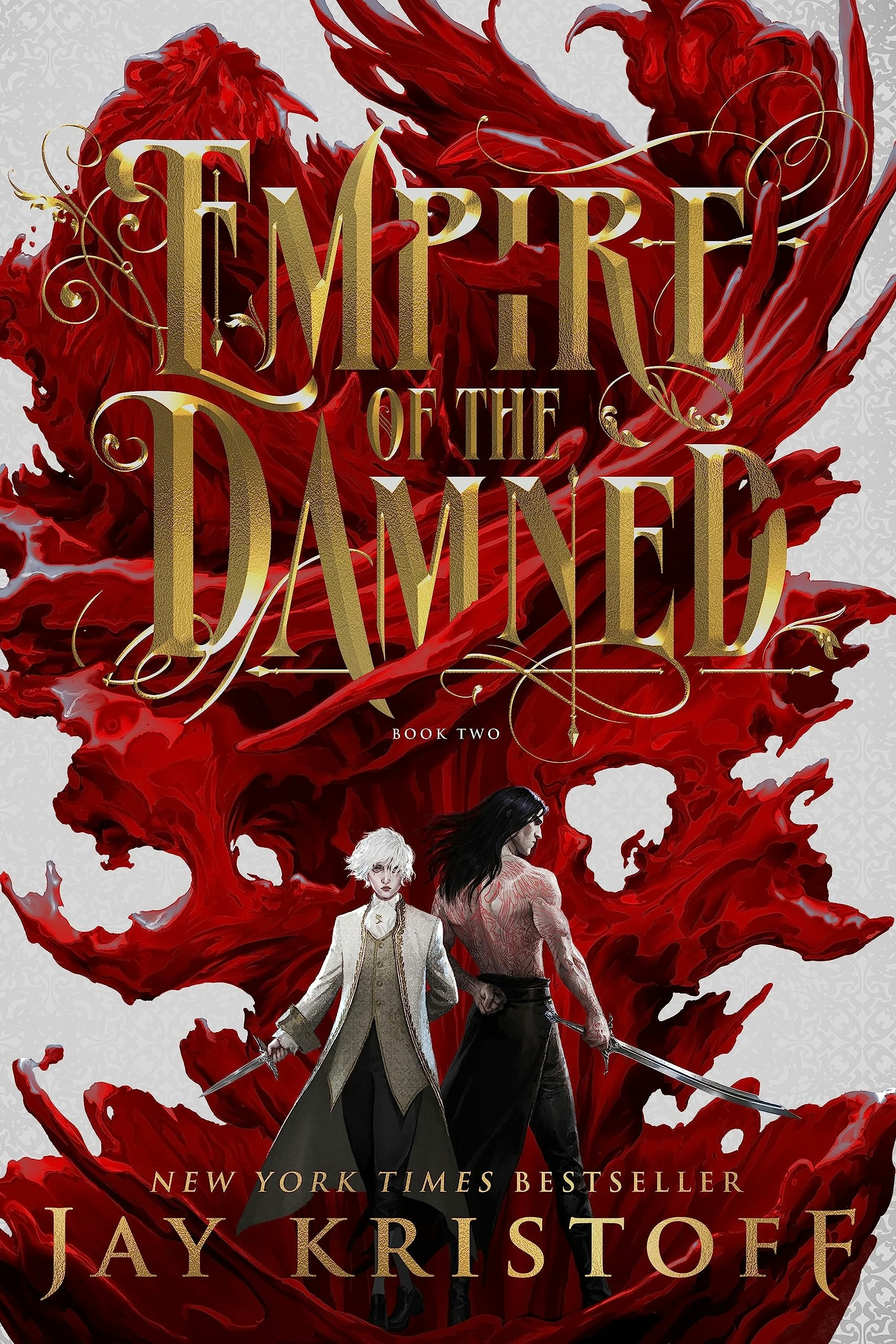
Jay Kristoff's Empire of the Damned is a bold, blood-soaked continuation that actually improves upon its predecessor—a rare achievement in fantasy sequels. This 2024 release proves that Kristoff isn't content to coast on the success of Empire of the Vampire; instead, he's weaponized the foundation of book one to construct something more ambitious, more dangerous, and significantly more emotionally resonant. If you're hunting for a dark fantasy sequel that justifies its existence, this is it.
What Empire of the Damned Actually Delivers
Gabriel de León has the Holy Grail. He should have won. He should have ended the endless night that has plagued the world for centuries. Instead, he's lost his shot—and now he's forced into an uneasy alliance with Liathe, a mysterious vampire whose motivations remain deliciously opaque. The premise is deceptively simple: deliver the Grail to the ancient Blood Esani and learn how to finally undo Daysdeath. The execution, however, is anything but straightforward.
Kristoff structures the narrative as a continuing interview between Gabriel and a vampire historian, but this time Celene's perspective bleeds through—literally and figuratively. This dual-viewpoint approach creates narrative friction that prevents the story from settling into comfortable predictability. When two characters remember the same events differently, the reader becomes an active investigator rather than a passive observer.
Writing Style: Effortless Confidence Meets Brutal Ambition
There's a palpable difference between a writer working hard and a writer who makes it look easy. Kristoff's prose in Empire of the Damned demonstrates the latter. Character dialogue crackles with wit and genuine affection—the banter between Gabriel and Dior is so entertaining that scenes featuring their verbal sparring become highlights rather than filler. These aren't characters explaining plot points to each other; they're people who've survived together and speak with the shorthand of the battle-tested.
The pacing, a legitimate criticism of the first book, has been dramatically tightened. Yes, this is still a hefty tome, but the narrative momentum never stalls. Kristoff understands that size doesn't excuse sluggish pacing—he's deployed his considerable word count strategically rather than indulgently.
The inclusion of maps, character recaps, and illustrations shows thoughtful consideration for the reader experience. In a series this complex, these aren't nice-to-haves; they're essential navigation tools that prevent the story from becoming inaccessible.
What Actually Works Here
Character development is the real victory. Liathe transforms from an intriguing secondary character into someone readers genuinely invest in—a remarkable feat given her antagonistic introduction. Phoebe, initially cryptic and purposefully opaque, emerges as a fan favorite by the novel's end. These aren't token additions; they're fully realized characters with conflicting motivations that create genuine tension.
Gabriel's internal struggle between his humanity and his rising bloodlust provides psychological depth that elevates this beyond straightforward adventure fantasy. He's not a hero becoming corrupted; he's a man fighting against corruption, and that distinction matters. His sword, Ashdrinker, functions as both weapon and conscience—a character in its own right with personality and agency.
The world-building expands meaningfully. The conflict between Blood Dyvok and duskdancers, the frozen Highlands setting, the Blood Voss threats—these aren't scattered plot devices. They're moving parts in an interconnected system where character choices have cascading consequences.
The emotional core is genuine. This isn't a book that mistakes cynicism for depth or gore for substance. When characters care about each other, you feel it. When they face loss, it lands.
Where It Stumbles
The reduction of Blood Voss page time compared to the first installment frustrates readers invested in that threat. Their diminished presence creates an imbalance—the external threat feels less urgent when the narrative prioritizes internal conflicts and character dynamics.
The sexual content, while expertly written, may alienate readers seeking plot-forward pacing. Several intimate scenes, though thematically relevant, stretch longer than their narrative necessity warrants. This isn't a flaw in execution; it's a matter of preference. Readers seeking minimal romance will find themselves skimming.
The ending—and this is both strength and weakness—leaves readers suspended over a narrative cliff. The resolution feels earned rather than arbitrary, but the dangling threads will torture anyone waiting for the conclusion. This is intentional storytelling, not a bug, but it's worth acknowledging before diving in.
Who Should Read Empire of the Damned
Read this if you: loved the first book and want more depth, enjoy character-driven dark fantasy with genuine emotional stakes, appreciate witty dialogue and complex relationships, want a vampire story that subverts genre expectations, or prefer intricate world-building over straightforward plot progression.
Skip this if you: found Empire of the Vampire too lengthy and prefer tighter narratives, want minimal sexual content, dislike cliffhanger endings, prefer action-heavy fantasy over character introspection, or haven't read the first book (this sequel absolutely requires that foundation).
Comparisons for Context
If you enjoyed The Poppy War by R.F. Kuang for its dark themes and character complexity, Empire of the Damned occupies similar territory—though with more humor and less nihilism. Compared to The Blade Itself by Joe Abercrombie, Kristoff's sequel is more emotionally accessible while maintaining comparable moral ambiguity.
Is Empire of the Damned Worth Reading?
Yes, unequivocally. This is a sequel that justifies its existence by expanding on what worked in the first book while genuinely improving the execution. It's not a perfect novel—no book is—but it's a confident, ambitious follow-up that respects reader investment while raising stakes both external and internal.
Jay Kristoff's Empire of the Damned proves that the author isn't interested in repeating himself. He's iterating, improving, and taking creative risks that pay off. The 4.55-star rating reflects genuine reader consensus: this is a book that delivers on its promises.
Final Score: 8.5/10
A masterfully executed dark fantasy sequel that improves upon its predecessor through superior pacing, deeper character work, and genuine emotional stakes—marred only by occasional excess and a cliffhanger that will leave you desperate for the conclusion.