Category:
Book ReviewsEl loco de Dios en el fin del mundo Review
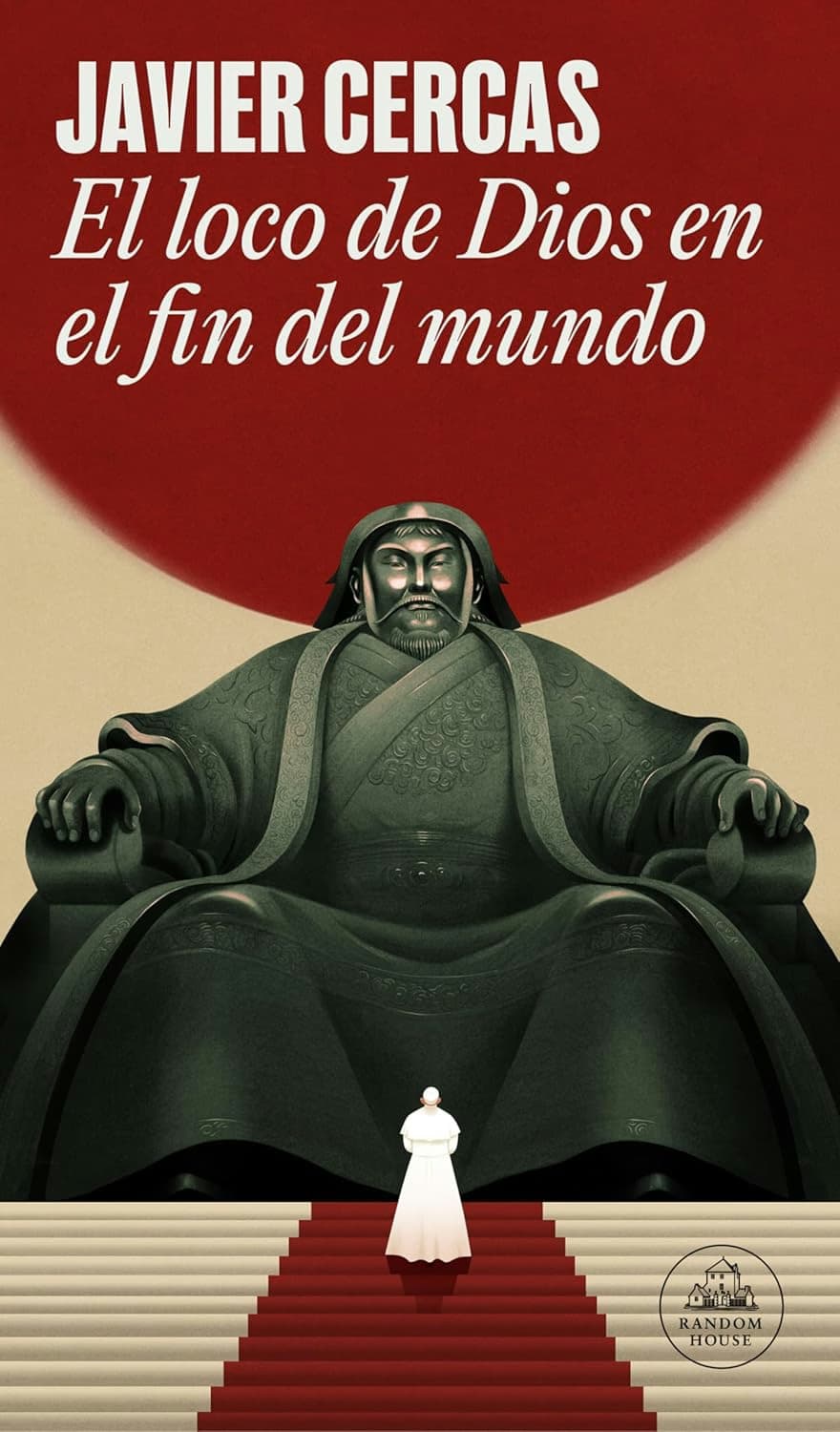
Prices can sometimes be lower on bigger marketplaces, but this link helps independent bookstores and local reading communities.
Javier Cercas's El loco de Dios en el fin del mundo is a masterclass in converting an absurd premise into a profound meditation on faith, mortality, and what it means to seek transcendence. This is not a conventional biography, not quite a memoir, and certainly not a work of fiction—it's something far more unsettling: a brutally honest conversation between a militant atheist and Pope Francis about whether love survives death.
The book's central conceit is almost too perfect to be true. Cercas, a self-described laicist rationalist and committed skeptic, receives an unprecedented invitation from the Vatican to accompany Pope Francis on a papal journey to Mongolia in 2023. He accepts with one burning question: Will his devoutly Catholic mother see her deceased husband again in the afterlife? The answer he seeks from the pontiff isn't theological—it's personal, desperate, and deeply human.
What This Book Actually Is
This El loco de Dios en el fin del mundo review must address what makes this work so difficult to classify and so compelling to read. Cercas deliberately withholds his central revelation until the final pages, using the entire narrative as an elaborate prelude. The Mongolia trip becomes a vehicle for exploring something far larger: the role of the spiritual in human existence, the architecture of belief systems, and the gap between institutional religion and lived faith.
The author structures the book around multiple perspectives. We encounter not just Cercas's own skepticism but the voices of Vatican insiders, Church historians, and those closest to Pope Francis. Crucially, Cercas makes a distinction that reframes the entire narrative: Jorge Bergoglio and Pope Francis are not the same person. The pontiff, he argues, is "more Bergoglio than Bergoglio himself"—a perfected, sublimated version of who he always dreamed of becoming. This isn't idealization; it's recognition of profound human transformation.
The Writing and Structure
Cercas employs a thriller-like pacing despite the subject matter being fundamentally contemplative. The narrative tension doesn't come from plot but from the author's visible wrestling with his own convictions. His prose is conversational yet precise, peppered with self-aware irony about his own atheism. He doesn't hide his anticlericalism—the Church's historical abuses, its institutional failures, its resistance to progress—but he also refuses to let these criticisms foreclose genuine curiosity about faith itself.
The book's greatest structural gambit is its restraint. By reserving the emotional payoff for the final pages, Cercas forces readers to engage with his philosophical journey rather than simply consuming a celebrity encounter. This approach will frustrate readers seeking a gossipy papal memoir, but it rewards those willing to sit with genuine intellectual uncertainty.
Where This Book Succeeds
The El loco de Dios en el fin del mundo review must acknowledge what readers consistently identify as the book's emotional core: its honesty about grief and the human hunger for continuity beyond death. Cercas never pretends his skepticism insulates him from this hunger. His mother's faith becomes a mirror in which he sees his own vulnerability.
The book also succeeds as a portrait of Pope Francis that avoids hagiography. Cercas captures the pontiff's genuine commitment to mercy and his willingness to engage with difficult questions. The conversations feel real—neither adversarial nor uncritical, but genuinely exploratory. This is rare in contemporary religious writing, where positions tend to be heavily fortified.
Cercas's examination of anticlericalism as a family inheritance is particularly incisive. He traces how his own atheism connects to generations of Spanish liberal thought, creating a genealogy of disbelief. Yet this historical awareness doesn't prevent him from recognizing that both anticlericalism and faith can be forms of seeking.
What Doesn't Quite Work
The book's lengthy preamble, while philosophically rich, occasionally feels indulgent. Readers arriving for the papal encounter may find themselves frustrated by Cercas's digressions into Church history and theological tangents. The payoff justifies this approach for some readers but not all.
Additionally, the book's treatment of women—particularly the figure of Cercas's mother—remains somewhat peripheral. She motivates the entire narrative, yet her own faith journey receives less exploration than the institutional structures surrounding it. A deeper engagement with maternal spirituality might have complicated the book's conclusions in productive ways.
Who Should Read This
This book is essential for readers interested in the intersection of faith and doubt, memoir and philosophy, or contemporary Catholicism. It will appeal to those who appreciated works exploring religious belief from skeptical perspectives—though unlike polemical atheist literature, this book refuses easy dismissal.
It's also perfect for anyone grappling with mortality, inheritance, or what we owe to our parents' convictions. The personal stakes give the theological questions weight.
Who won't enjoy it: Readers seeking a conventional biography of Pope Francis, those looking for attacks on institutional religion, or anyone uncomfortable with philosophical ambiguity. This book asks questions rather than providing answers.
The Divisive Ending
What separates El loco de Dios en el fin del mundo from other books about faith is its ending. Without spoiling it, Cercas's final revelation is simultaneously simple and devastating. It's the kind of conclusion that makes readers want to immediately reread the entire work with new understanding. Some find this deeply moving; others may find it too subtle, too dependent on the reader's own capacity for emotional recognition.
The ending works precisely because it refuses to resolve the central tension between belief and skepticism. It doesn't convert Cercas or confirm his atheism. Instead, it suggests that the binary itself might be false—that faith and doubt exist on a continuum, and that seeking itself might be the truest form of belief.
Final Verdict
This is a book that earns its 4.22/5 rating by dividing readers not into satisfied and disappointed camps, but into those who recognize its ambition and those who wish it had aimed differently. Is El loco de Dios en el fin del mundo worth reading? Yes—but only if you're willing to surrender the comfort of certainty, whether that certainty is religious or rationalist.
Javier Cercas has written something rare: a work of intellectual rigor that's also genuinely moving. It's a book that respects both faith and skepticism enough to refuse choosing between them, instead exploring the landscape where they meet. In our polarized moment, this restraint feels revolutionary.