Category:
Book ReviewsDidion and Babitz Review: Gossip Over Rigor
Prices can sometimes be lower on bigger marketplaces, but this link helps independent bookstores and local reading communities.
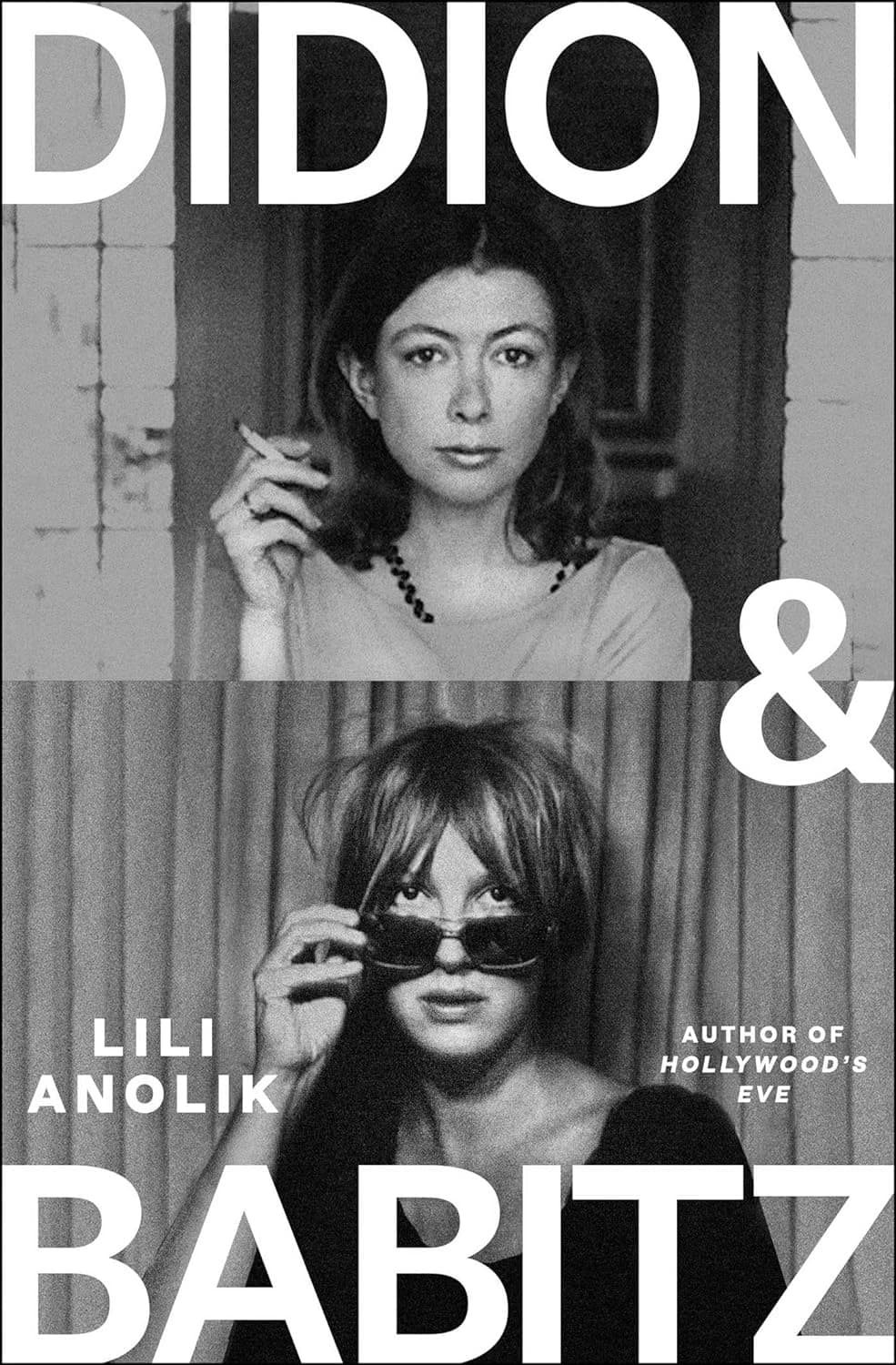
Lili Anolik's "Didion and Babitz" promises to unlock the mystery of Joan Didion through her complicated friendship with Eve Babitz, but what emerges is something far messier and more problematic than a straightforward literary biography. This non-fiction account trades serious critical analysis for Hollywood gossip, delivering a book that's undeniably entertaining yet fundamentally compromised by its author's transparent bias and questionable editorial choices.
The premise is genuinely compelling: Anolik discovered Eve Babitz's personal archives—journals, letters, photographs—after Babitz's death in 2021, offering unprecedented access to the inner circle of two of America's most important 20th-century writers. That 7406 Franklin Avenue address in Hollywood becomes a portal to the late 1960s and early 1970s, when Didion and her husband John Gregory Dunne hosted a salon-like gathering of writers, artists, musicians, and hangers-on. It's the kind of historical material that could have produced something genuinely illuminating.
What It's Actually About
The book positions itself as a dual biography exploring the mutual attractions and antipathies between Didion and Babitz. In reality, it's almost entirely Eve's story, with Joan serving primarily as a foil—the cool, controlled counterpoint to Eve's burning intensity. Anolik uses Babitz's letters and observations as a lens supposedly to "unlock" Didion, but what readers actually get is speculation about Didion's interior life filtered through Babitz's perspective and Anolik's own interpretations.
The narrative arc follows Babitz's trajectory from her privileged early years (goddaughter of Igor Stravinsky, muse to Marcel Duchamp) through her relationships with various famous men, her writing aspirations, and her eventual self-destruction. Didion appears throughout, but mostly as a distant, enigmatic figure—precisely what makes this "Didion and Babitz" review so frustrating for readers seeking genuine insight into the former.
The Fundamental Problem: Narrative Bias
Anolik opens by warning readers: "People are inclined to get a little soft in the head where Joan Didion is concerned" and "Reader: don't be a baby." This isn't a neutral framing. It's a declaration of allegiance that colors everything that follows. The author has spent years in communication with Babitz and identifies as "an Eve girl," a preference that permeates the book's architecture.
This bias manifests in several troubling ways. Didion is repeatedly characterized as cold, calculating, and indifferent to her husband and daughter, yet her two most acclaimed books—"The Year of Magical Thinking" and "Blue Nights"—directly contradict this narrative by exploring precisely those relationships with devastating honesty. Rather than grapple with this contradiction, Anolik cherry-picks quotes to support her predetermined interpretation.
Moreover, the book diagnoses Didion with an eating disorder based on Anolik's own speculation about her small stature, a psychological diagnosis rendered by an author without qualifications, presented as fact. This crosses from literary criticism into something closer to tabloid psychoanalysis.
The Editing Problem
Perhaps most damaging to the book's credibility is Anolik's admission that she edited excerpts from Babitz's writing without indicating where cuts were made. For a work of non-fiction biography relying heavily on primary source material, this is a serious methodological failure. Readers cannot trust which words are Babitz's original voice and which have been shaped or recontextualized by the author.
This matters because the entire premise depends on Babitz's "diary-like letters" and "incisive intelligence" as the key to understanding Didion. If those letters have been edited without notation, the foundation crumbles.
Where the Book Actually Succeeds
Despite these significant problems, "Didion and Babitz" is undeniably entertaining. Anolik is a skilled writer who captures the texture of a specific time and place with genuine flair. The Hollywood scene of the late 1960s comes alive—the parties, the drugs, the mix of high culture and low living, the sexual politics of that particular moment.
Babitz herself emerges as a fascinating figure: brilliant, self-destructive, witty, and tragic. Anolik captures her voice and her particular genius for observation. If this book were marketed purely as a biography of Eve Babitz, it would be considerably more defensible. The problem is the title and the marketing promise of revealing Joan Didion.
The book also includes genuinely interesting historical context about Los Angeles in that era, the literary scene, and the lives of both women. There's real research here, even if the conclusions drawn from it are questionable.
The Gender Politics Problem
Several readers have noted that the book's framework—defining Eve primarily through her body and her relationships with men, while defining Joan through her emotional coldness and calculated ambition—feels reductive and oddly regressive for a contemporary work about two brilliant female writers. Rather than examining how both women navigated a male-dominated literary world, the book often seems to pit them against each other in ways that feel more like high school cattiness than serious literary criticism.
This is particularly frustrating given that both Didion and Babitz deserve better than to be flattened into archetypal rivals. They were complex, accomplished women working in a specific historical moment. A more rigorous book would explore that complexity rather than weaponize it.
Who Should Read This
Perfect for: Readers fascinated by Eve Babitz who want a deep dive into her life and archives. People interested in 1960s-70s Los Angeles culture and the literary scene of that era. Those who enjoy gossipy, character-driven narrative non-fiction without demanding strict journalistic standards. Fans of Hollywood history and the personal lives of famous writers.
Will frustrate: Serious Didion scholars and readers seeking genuine critical analysis. Anyone who values methodological rigor in biography and journalism. Readers looking for balanced treatment of both subjects. Those who find the book's framing of women through their bodies and relationships troubling. People who appreciate Didion's actual work and want it engaged with seriously.
Is "Didion and Babitz" Worth Reading?
That depends entirely on your expectations. If you approach this as an entertaining, gossipy Hollywood narrative focused primarily on Eve Babitz, with Joan Didion as a secondary figure, you'll likely enjoy it. The writing is engaging, the historical material is interesting, and Babitz's story is genuinely compelling.
If you're reading because the title promises to reveal Joan Didion, you'll feel misled. The book doesn't deliver on that promise. What it delivers instead is speculation, bias, and a one-sided account that tells you far more about Anolik's preferences than about either woman's actual interior life.
The book sits in an uncomfortable middle ground—too gossipy to be serious biography, too serious in its claims to be pure entertainment. It wants the credibility of rigorous non-fiction while operating with the standards of a well-researched magazine profile.
Final Verdict
"Didion and Babitz" is a readable, entertaining book that fails to deliver on its central promise. Anolik's access to Babitz's archives and her skill as a writer produce something genuinely interesting about Eve, but the framing as a dual biography revealing Joan Didion is fundamentally misleading. The editorial choices, the unacknowledged bias, and the pop-psychology diagnoses undermine the book's credibility. It's gossip dressed up as biography, and while gossip can be fun, it shouldn't masquerade as serious literary criticism.
Compare this to something like Jennifer Egan's work on literary figures or more rigorous dual biographies that manage to give both subjects genuine depth and complexity. "Didion and Babitz" falls short of that standard, even as it succeeds as a page-turner about a fascinating figure in Eve Babitz.