Category:
Book ReviewsDelusional Review: Fast-Paced Thriller That Delivers
Prices can sometimes be lower on bigger marketplaces, but this link helps independent bookstores and local reading communities.
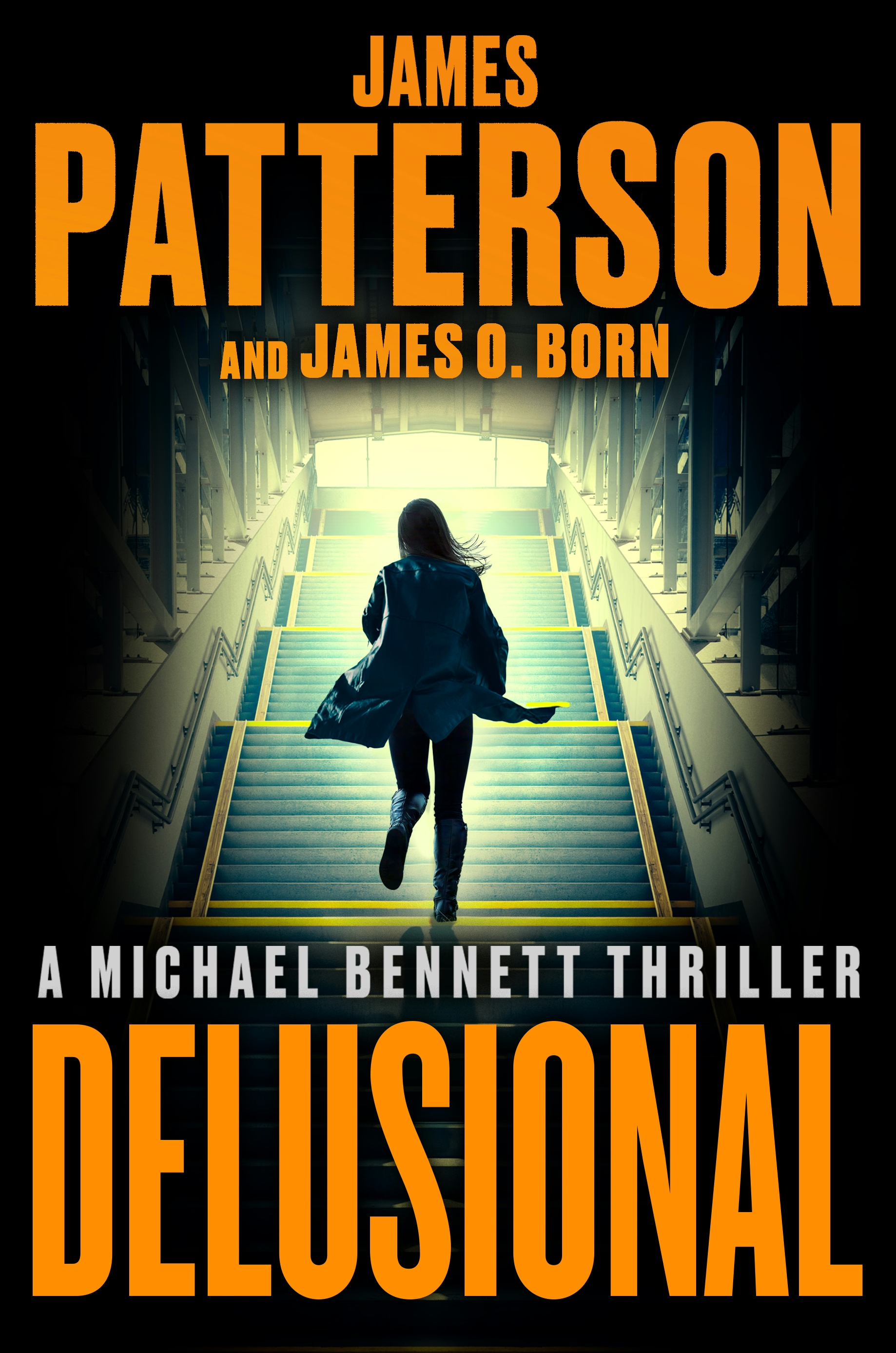
James Patterson's Delusional, co-authored with James O. Born, marks the 18th installment in the Michael Bennett series—and it proves the franchise still has plenty of ammunition left. This is a genuinely entertaining thriller that splits its narrative between serial bombing investigations in New York City and a family crisis unfolding in Montana, weaving together two seemingly unrelated cases with the kind of propulsive momentum that makes Patterson's work so compulsively readable.
The central question driving this Delusional review is straightforward: does the Bennett series still justify its shelf space nearly two decades in? The answer is a qualified yes—but with important caveats about what you're actually getting.
What This Book Is Actually About
The plot operates on two parallel tracks. Detective Michael Bennett and his partner Rob Trilling find themselves hunting a serial bomber who's been targeting New York City with no clear demands or pattern. Meanwhile, Trilling gets pulled back to his hometown near Bozeman, Montana, where his family's car lot is being threatened by an Albanian gangster posing as a legitimate LA real estate developer. What begins as separate crises gradually converges, forcing Bennett to juggle his responsibilities as both a detective and a loyal friend.
The bomber narrative carries echoes of the Unabomber case—a comparison the book itself invites. We get access to the perpetrator's perspective, which adds psychological depth to what could have been a straightforward procedural. This narrative choice elevates the material beyond simple crime-solving; it forces readers to confront the twisted logic of someone who genuinely believes their violence serves a greater purpose.
The Bennett Family Factor: Why This Series Actually Works
Here's what separates Michael Bennett from Patterson's other detective franchises: the domestic life isn't window dressing. Bennett is a single father to ten adopted children, now remarried to Mary Catherine (his former housekeeper, now pregnant with their first biological child together), and still processing the loss of his first wife, Maeve. This isn't incidental character detail—it's the emotional core that makes readers care whether he survives each case.
The family dynamics provide genuine stakes beyond the immediate plot. Bennett's juggling act between fatherhood, marriage, and law enforcement feels earned rather than manufactured. Readers who've followed the series appreciate watching these relationships deepen and evolve across multiple books. It's the "secret sauce," as one longtime fan noted, that keeps people returning to this franchise.
Writing Style: Patterson's Formula in Full Effect
If you've read any James Patterson thriller in the last decade, you know exactly what you're getting with Delusional. Short, punchy chapters. Fast pacing that rarely allows for reflection. Dialogue-heavy scenes that move plot forward without dwelling on introspection. This isn't literary fiction—it's engineered for consumption, and it works precisely because it doesn't apologize for what it is.
The co-authorship with Born shows no seams. The narrative maintains consistent voice and momentum throughout, with neither author's presence overwhelming the other. The dual-location structure (New York and Montana) could have created tonal whiplash, but instead it generates genuine tension as readers wonder which crisis will explode first.
Where the Book Excels
The characterization of Rob Trilling provides unexpected depth. His return to Montana isn't just a plot device; it's character development that explores his history and loyalties in ways that feel organic to the larger series. The inclusion of ATF Agent Maggie Chin adds a new dynamic to Bennett's investigative team, creating entertaining friction and fresh perspectives.
The bomber's perspective work is genuinely unsettling. By allowing readers into the perpetrator's mind—hearing their justifications, their anger at government overreach, their genuine conviction that they're serving humanity—Patterson forces an uncomfortable recognition: true believers in any cause don't see themselves as villains. This moral complexity elevates Delusional above standard procedural territory.
The ending delivers genuine satisfaction. Multiple readers specifically praised the climax, suggesting it justifies the buildup rather than disappointing with a rushed resolution.
What Falls Short
The dual-narrative structure, while generally effective, occasionally feels like two different books awkwardly stitched together. The Montana storyline involving the Albanian gangster lacks the philosophical weight of the bombing investigation. One reads as a personal crisis; the other as a meditation on radicalization and government alienation. They don't quite achieve the thematic unity the book seems to be reaching for.
For readers new to the Bennett series, the accumulated family mythology might feel overwhelming rather than endearing. The book assumes familiarity with Bennett's history, his children's personalities, and his relationship evolution. It's not inaccessible to newcomers, but it's optimized for franchise loyalists.
Some readers may find the pacing relentless to the point of exhaustion. There's minimal downtime for character reflection or atmospheric tension-building. Everything moves forward at maximum velocity, which works for some readers and feels shallow to others.
Who Should Read Delusional
Perfect for: Existing Michael Bennett fans who've been following the series. Readers who love fast-paced thrillers with minimal downtime. Anyone seeking a procedural that balances investigation with meaningful family dynamics. Fans of serial killer narratives who appreciate access to the perpetrator's psychology. People who want a "beach read" that's actually well-constructed.
Skip it if: You prefer literary depth over plot momentum. You're new to the Bennett series and want to start from the beginning. You dislike short chapters and rapid scene-switching. You're looking for moral ambiguity rather than clear good-versus-evil frameworks. You prefer standalone thrillers to series entries.
How Delusional Compares
If you're familiar with Patterson's Alex Cross series, Delusional operates in similar territory but with a warmer emotional core. Bennett's family life gives the books a coziness that Cross's investigations often lack. Compared to the Women's Murder Club series, Delusional is more male-centric and less ensemble-focused, though the supporting cast still matters.
For readers considering this against other serial killer thrillers: Delusional won't match the psychological intensity of something like The Silence of the Lambs, but it doesn't pretend to. It's entertainment-grade thriller work, competently executed and genuinely engaging.
The Verdict on This Delusional Review
Is Delusional worth reading? Yes, if you understand what you're purchasing: an expertly paced entertainment product that delivers exactly what the franchise promises. It's not groundbreaking. It won't change how you think about crime fiction. But it's solidly constructed, emotionally grounded (thanks to the Bennett family), and genuinely difficult to put down.
The 18th book in a series has no obligation to justify its existence—yet Delusional mostly does. It advances character development, explores thematically interesting material about radicalization and government alienation, and maintains the franchise's core appeal: watching a good man juggle impossible responsibilities and somehow prevail.
For Bennett devotees, this is mandatory reading. For thriller fans curious about the series, it's a worthwhile entry point, though starting earlier in the franchise would provide richer context. For casual readers seeking a page-turner, Delusional delivers exactly that, no more, no less.