Category:
BiographyCounting the Cost Review: Brutal Honesty Over Juicy Gossip
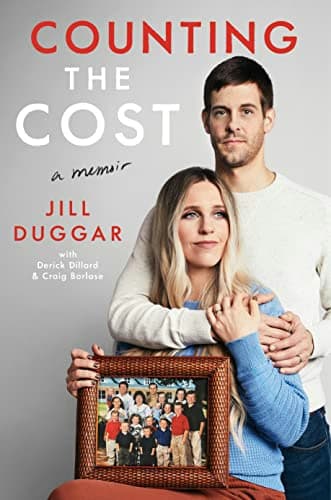
Quick Verdict
Counting the Cost by Jill Duggar is a measured, therapeutic memoir that refuses to be the explosive tell-all readers might expect. Instead of sensationalism, Jill delivers something more valuable: a methodical examination of how patriarchal religious control operates within families and media systems. This Counting the Cost review explores whether the book lives up to the hype surrounding one of reality television's most scrutinized families.
The book is worth reading if you're genuinely interested in religious trauma, family estrangement, and the psychological cost of growing up on camera. It's not worth reading if you're hunting for salacious Duggar family drama or a complete ideological deconstruction of conservative Christianity.
What This Book Actually Is (And Isn't)
Jill Duggar's memoir occupies an uncomfortable middle ground that confuses many readers. It's not Jennette McCurdy's I'm Glad My Mom Died—that scorched-earth celebrity memoir that leaves no stone unturned. It's not a comprehensive family exposé that names every sin and demand accountability from every family member. What Jill's Counting the Cost actually delivers is something narrower but perhaps more honest: a woman's personal journey from obedience to autonomy within the IBLP (Institute in Basic Life Principles) movement and her family's media empire.
This distinction matters because it sets expectations. Readers expecting a Duggar family takedown will feel disappointed. Readers seeking validation that their own experiences with controlling families mirror Jill's will find profound recognition.
The Unexpected Strength: Refusing Easy Answers
The most striking aspect of this memoir is what Jill doesn't do. She doesn't completely sever her relationship with her parents. She doesn't renounce her faith. She doesn't dismantle every aspect of her upbringing as fundamentally corrupt. Instead, she charts a messier, more psychologically realistic path: setting boundaries while maintaining connection, questioning without wholesale rejection, and acknowledging that healing isn't linear or complete.
This refusal to provide narrative satisfaction—the clean break, the total victory—actually makes the book more credible. Anyone who's navigated family estrangement knows that the fantasy of permanent separation rarely matches reality. The desire to please a controlling parent doesn't evaporate after therapy. Jill captures this tension with unflinching accuracy, which is precisely why former members of high-control religious groups report feeling seen by her account.
The emotional labor documented in these pages is substantial. Jill describes specific moments—wearing pants for the first time and witnessing her father's reaction, the constant surveillance, the manipulation disguised as spiritual guidance—with enough concrete detail to illuminate systemic abuse rather than just personal grievance.
Where the Book Plays It Safe
The strategic caution in Counting the Cost is both understandable and limiting. Jill deliberately minimizes discussion of her brother Josh's crimes and her own trauma related to his actions. While respecting a survivor's right to control her own narrative is important, this omission means the book cannot fully examine how abuse operates within the family system. The reader is left with a partial picture.
Similarly, Jill's treatment of her mother Michelle is notably gentle. While she documents Jim Bob's controlling behavior extensively, Michelle's role as enabler receives less scrutiny. This likely reflects Jill's tactical decision to preserve family relationships rather than burn bridges—a choice that makes sense for her life but limits the book's critical depth.
The writing itself is straightforward and occasionally repetitive. This isn't literary memoir in the vein of Educated by Tara Westover, which combines narrative artistry with intellectual rigor. Jill's prose is functional and earnest, which serves her purpose but won't satisfy readers seeking stylistic sophistication. The book reads like extended therapy notes—which is fitting, given how central therapy becomes to her healing journey.
The Intersection That Makes This Book Matter
What elevates Counting the Cost beyond a standard religious trauma memoir is Jill's analysis of how capitalism, patriarchal religion, and media exploitation intersected to shape her life. The 19 Kids and Counting machine didn't just broadcast her family—it monetized their obedience. Jim Bob controlled both the family structure and the media narrative, creating a system where questioning authority meant risking financial stability and family connection simultaneously.
This three-way power dynamic (family, religion, media) is rarely examined with such clarity in memoir. Most books focus on one or two elements. Jill's Counting the Cost review-worthy insight is showing how these systems reinforce each other, making escape exponentially harder than it would be under any single form of control alone.
Who This Book Is Perfect For
This memoir is essential reading for:
- People raised in high-control religious environments (IBLP, fundamentalist churches, similar movements) who need validation that their experiences weren't isolated
- Those navigating family estrangement who want to see how someone maintains connection while establishing boundaries
- Media studies scholars interested in how reality television exploits families
- Anyone curious about the Duggar family willing to accept a measured account rather than scandal
- Therapists and counselors working with religious trauma clients
Who Will Likely Hate It
This book will frustrate:
- Readers seeking maximum Duggar family drama (you'll be disappointed)
- People wanting complete ideological rejection of conservative Christianity (Jill remains a believer)
- Those expecting literary excellence (the prose is utilitarian)
- Fans of the Duggar family who view any criticism as betrayal
- Readers who need their abuse narratives to include villain accountability (Jill doesn't provide this)
Comparison to Similar Memoirs
If you've read I'm Glad My Mom Died by Jennette McCurdy, expect something entirely different. McCurdy's memoir is a surgical strike against her abuser. Counting the Cost is a careful negotiation with family bonds that won't break cleanly. McCurdy seeks vindication; Jill seeks understanding.
Compared to Educated by Tara Westover, Jill's book is less philosophically ambitious but more emotionally immediate. Westover's memoir builds toward intellectual freedom; Jill's tracks the smaller, harder victories of daily autonomy—choosing what to wear, managing her own finances, raising children according to her own values.
The Real Question: Is It Worth Reading?
Yes, Counting the Cost is worth reading, but the answer depends on what you're seeking. If you want a comprehensive Duggar family exposé, you'll feel let down. If you want to understand how religious control operates psychologically and how people begin to dismantle it, this book delivers genuine insight.
Jill Duggar's memoir succeeds precisely because it refuses to be the book readers expected. It's not sensational. It's not complete. It's not revolutionary in its ideology. But it's honest about the messy work of becoming yourself when your identity was constructed by systems designed to prevent exactly that. That authenticity, more than any scandal, is what makes this book matter.
The cost Jill counts isn't just the price of leaving—it's the ongoing price of staying partially connected while building a separate self. That's a cost most memoirs never acknowledge, let alone examine with this much care.
Final Verdict
This is a book that rewards patient, thoughtful readers while frustrating those seeking sensation. Jill Duggar's Counting the Cost is therapeutic rather than transgressive, which makes it more useful for people actually healing from similar experiences but less immediately compelling for casual readers. The memoir's greatest strength is its refusal of easy narratives about family trauma and recovery.
Rating: 7.5/10 — A necessary, honest account that prioritizes psychological truth over narrative drama, limited by strategic caution but strengthened by its refusal to provide false resolution.