Category:
Book ReviewsCounsel, the Courtroom Is Open Review: Impressive Yet Frustratingly Formal
Prices can sometimes be lower on bigger marketplaces, but this link helps independent bookstores and local reading communities.
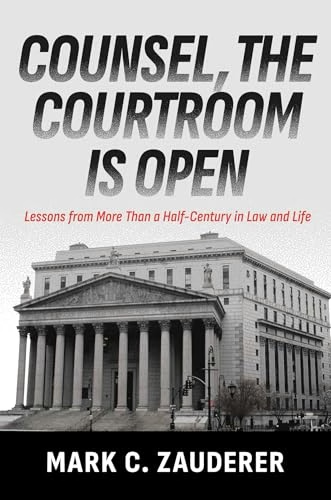
Mark C. Zauderer's Counsel, the Courtroom Is Open: Lessons from More Than a Half-Century in Law and Life arrives as a memoir from a lawyer who has genuinely lived an extraordinary professional existence. Five decades in practice, major litigation, courtroom reform, and proximity to power—the raw material screams compelling narrative. Yet this Counsel, the Courtroom Is Open review must confront an uncomfortable truth: the book's execution rarely matches the ambition of its premise. Zauderer has crafted something dignified and professionally accomplished, but emotionally distant—a polished résumé disguised as introspection.
Quick Verdict
This is a book that will deeply satisfy practicing lawyers and legal historians while leaving general readers cold. The legal anecdotes are genuine, the professional wisdom is earned, but the emotional core remains locked behind a wall of formal prose and self-regard. It's the kind of memoir that tells you what happened without making you feel what it meant to live through it.
What It's About
Zauderer traces his journey from childhood through a remarkable legal career spanning more than fifty years. The narrative moves through major cases, professional committees, court reform efforts, and encounters with powerful institutions and public figures. Interwoven are glimpses of family history—a mother's shocking announcement of divorce and remarriage, the shadow of Vietnam and Kent State on his generation, even tangential connections to Hollywood scandal. The book promises lessons distilled from decades of practice: insights about professionalism, judgment, civility, and what it means to sustain a meaningful legal life.
On paper, this should be magnetic. Instead, it often reads like chapters arranged chronologically rather than shaped as scenes with genuine tension.
The Central Problem: Style Over Substance
The most consistent criticism across reader responses isn't that Zauderer lacks interesting experiences—it's that he struggles to transform those experiences into felt narrative. The writing is clear and technically competent, but relentlessly formal. Chapters devoted to courtroom battles explain what happened but rarely convey the uncertainty of being inside the moment. The reader remains positioned as an observer of a distinguished career rather than an intimate witness to genuine struggle or discovery.
This matters because memoir's power lies in vulnerability. When Zauderer includes personal material—childhood recollections, family upheaval—these moments should crack open his professional armor. Instead, they're quickly reabsorbed into the larger career narrative. A mother's sudden remarriage becomes background evidence rather than lived emotional shock. The book talks about professional judgment but rarely questions the world that shaped it.
What Actually Works
Zauderer is at his best when he stops trying to be comprehensive and simply tells a specific story. The childhood memories carry genuine texture. Behind-the-scenes legal anecdotes occasionally reveal how power actually operates in courtrooms and law firms—the kind of insider knowledge that justifies a memoir in the first place. For lawyers, particularly those in New York legal circles, there's real value in observing how a singular practitioner maintained passion and excellence across five decades.
The book's implicit argument—that law is a profession rather than merely a business, that civility and reputation matter, that continuous improvement sustains fulfillment—comes through clearly. Readers seeking a roadmap for long-term success in legal practice will find genuine wisdom here. The book never pretends to be something it isn't: a career memoir from someone who takes his profession seriously.
Where It Falls Apart
The fundamental issue is balance. Zauderer spends too much time establishing his stature, name-dropping clients and cases, explaining legal procedures, and documenting committee work. These sections feel necessary to him—proof of accomplishment—but they bog down the narrative for readers seeking genuine memoir. The "lessons" promised in the subtitle often land as professional advice rather than hard-won insight born from failure or genuine moral struggle.
There's also a notable absence of self-questioning. The book presents decisions as made, cases as won or lost, lessons as learned—but rarely asks why those lessons took fifty years to understand, or what blindness persisted despite decades of experience. A sharper memoir would interrogate its own narrator. This one largely admires him.
Comparing to Similar Works
Consider this against other legal memoirs. John Grisham's courtroom thrillers, while fiction, convey more emotional authenticity about legal uncertainty than stretches of this book. Alternatively, memoirs like Just Mercy by Bryan Stevenson or Becoming by Michelle Obama succeed because they're willing to be uncomfortable—to admit confusion, failure, and moral complexity. Zauderer's book reads as though composed from the perspective of someone who has already decided what his career meant, rather than someone still wrestling with it.
Who Should Read This
Perfect for: Practicing attorneys seeking professional inspiration, legal historians interested in New York bar culture, readers who appreciate formal, dignified prose, anyone curious about how major litigation actually unfolds behind courtroom doors.
Will likely disappoint: General memoir readers seeking emotional depth, anyone wanting humor or irreverence, readers who prefer vulnerability to professionalism, those seeking a sharp critique of legal culture rather than a celebration of it.
This isn't a flaw in Zauderer's book so much as a mismatch between what different readers want from memoir. Lawyers will find it rewarding. Literary readers will find it dry.
The Honesty Question
What's most telling is that the book's most compelling moments involve other people's secrets: a mother's hidden remarriage, the shock of generational upheaval, glimpses of famous figures and powerful institutions. When the book turns inward, it closes down. There are hints of genuine life underneath—the pressure of Vietnam, family rupture, professional ambition—but they're treated as context rather than content. A bolder memoir would have made these tensions central.
Final Verdict
Mark Zauderer's Counsel, the Courtroom Is Open: Lessons from More Than a Half-Century in Law and Life is worth reading if you're specifically interested in legal practice, professional ethics, or New York legal history. It's a competent, dignified career memoir that delivers exactly what it promises to a particular audience. For general readers seeking a compelling life story with emotional force and self-interrogation, it will feel like a slog through someone's professional archive.
The book's rating of 4.32/5 across thousands of readers reveals the divide: lawyers and legal professionals rate it highly; general readers rate it significantly lower. This isn't a book that failed—it's a book that succeeded for its intended audience while missing the broader readership it might have reached with more vulnerability and narrative ambition.
Is Counsel, the Courtroom Is Open worth reading? Yes, if you're a lawyer or legal enthusiast. No, if you're seeking a memoir that challenges rather than celebrates its subject.
Final Score: 6.5/10
A professionally accomplished memoir that earns respect without quite earning investment—valuable for specialists, frustrating for everyone else.