Category:
Book ReviewsConversations on Love Review: A Messy, Honest Guide
Prices can sometimes be lower on bigger marketplaces, but this link helps independent bookstores and local reading communities.
Quick Verdict
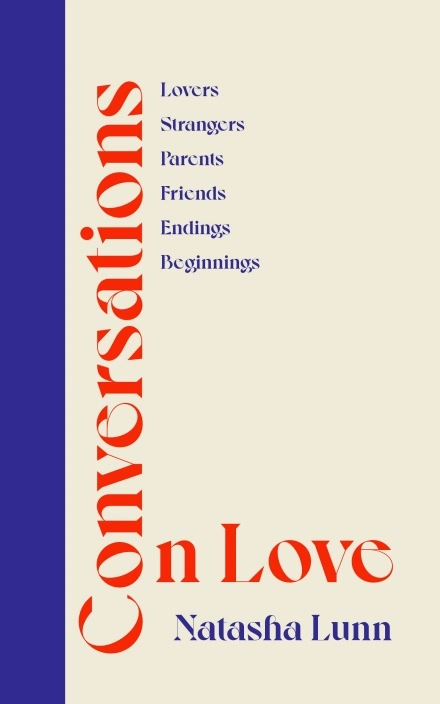
Conversations on Love by Natasha Lunn is a refreshingly unpolished exploration of relationships that refuses to offer easy answers—and that's precisely what makes it valuable. This isn't a self-help manual with ten-step formulas; it's a collection of intimate conversations that acknowledge love in all its complexity, vulnerability, and occasional mundanity. If you're searching for permission to feel confused about love, this book delivers it generously.
What This Book Actually Is
Natasha Lunn's Conversations on Love arrived as a Sunday Times bestseller with considerable buzz, and for good reason. Rather than positioning herself as an expert, Lunn approaches love as a journalist curious about how it actually works in real human lives. She interviews everyone from psychotherapist Philippa Perry to writer Roxane Gay, from relationship psychologist Esther Perel to grief specialist Stephen Grosz.
The structure mirrors a long conversation with a trusted friend. Each chapter weaves Lunn's personal reflections with expert insights, covering romantic love, friendship, sexuality, loss, parenthood, and solitude. There's no pretense of comprehensiveness—instead, Lunn explores specific moments where love reveals itself: the terror of vulnerability, the loneliness of loss, the unexpected joy in ordinary connection.
The Architecture of Honesty
What distinguishes this Conversations on Love review from typical book analysis is recognizing what Lunn deliberately avoids. She doesn't promise transformation. She doesn't suggest that understanding love will fix your relationship problems. Instead, she maps the emotional terrain with the precision of someone who's gotten lost there herself.
The writing style is deliberately intimate. Lunn shares her own romantic uncertainties—her journey toward being "super crazy stupid cheesy" in love for the first time—alongside her interviewees' wisdom. This creates an unusual dynamic where expert knowledge doesn't overshadow personal experience but rather illuminates it. You're not reading theory; you're eavesdropping on meaningful conversations.
The book's structure allows for genuine flexibility. Readers consistently note that you can open to any page and find something worth sitting with. This isn't accidental; it's the result of careful editorial choices that prioritize depth over narrative momentum.
Where Lunn's Approach Succeeds
The strongest sections demolish romantic mythology. When Alain de Botton discusses the psychology of being alone, or when Emily Nagoski explores the science of sexual desire beyond cultural scripts, Lunn creates space for readers to recalibrate their expectations. This matters because most cultural messaging about love operates through fantasy rather than reality.
The book excels at normalizing contradiction. Love requires both commitment and acceptance of impermanence. Relationships need both vulnerability and boundaries. Friendship matters as much as romance, yet receives a fraction of cultural attention. Lunn doesn't resolve these tensions; she sits comfortably within them, which is far more useful than false resolution.
Particularly effective are the chapters on loss and grief. Rather than offering consolation, Lunn and her interviewees acknowledge that some forms of love's ending don't heal neatly. This honesty about grief—especially the loneliness of loss that Lisa Taddeo explores—provides something genuinely rare: permission to grieve without timeline.
The section on friendship, anchored by Candice Carty-Williams' insights, addresses a genuine gap in contemporary love discourse. We have countless books about romantic partnership; far fewer examine why friendship often feels secondary despite being foundational to wellbeing. Lunn corrects this imbalance without diminishing romantic love.
What Doesn't Quite Land
The book's strength—its refusal to provide frameworks—becomes a limitation for readers seeking practical guidance. If you're navigating a specific relationship crisis or seeking actionable strategies, this book won't deliver them. It's contemplative rather than prescriptive, which is intentional but worth acknowledging.
The range of interviewees, while impressive, occasionally creates tonal whiplash. Moving from Dolly Alderton's raw vulnerability to Alain de Botton's philosophical distance can feel jarring. Some readers will appreciate this variety; others will find it scattered.
There's also a subtle class consciousness to the book that deserves mention. Most interviewees are successful, articulate professionals with platforms. The conversations feel authentic, but they don't represent the full spectrum of how love operates across different socioeconomic contexts or cultural backgrounds. This isn't a fatal flaw—it's the reality of who gets published and interviewed—but it's worth noting.
The memoir elements, while generally effective, occasionally overshadow the expert perspectives. Lunn's personal journey is compelling, but some readers may wish for more sustained engagement with specific topics rather than the constant pivot back to her own experience.
How This Compares to Similar Books
If you've read Alain de Botton's Essays in Love or Esther Perel's Mating in Captivity, you'll recognize familiar territory. However, Lunn's approach differs significantly. De Botton offers philosophical frameworks; Perel provides psychological models; Lunn creates a chorus of voices that collectively suggest love is too vast for any single perspective.
Compared to typical self-help relationship books, Conversations on Love is radically anti-prescriptive. It won't promise to save your marriage or help you find "the one." This makes it either refreshingly honest or frustratingly vague, depending on what you need.
Who This Book Is Perfect For
This book belongs with readers who:
- Feel confused about love and want permission to stay confused
- Prefer essays and conversations to narrative-driven memoirs
- Value vulnerability and honesty over polished advice
- Are navigating significant relationship transitions or loss
- Want to understand love beyond romantic partnership
- Appreciate writing that acknowledges life's contradictions rather than resolving them
It's particularly powerful for people experiencing their first serious love (as many reviewers noted), grieving relationship loss, or questioning cultural narratives about what love should look like.
Who Might Struggle With It
This book will frustrate readers seeking:
- Clear frameworks or actionable steps
- A cohesive narrative arc
- Answers rather than questions
- Representation of diverse socioeconomic or cultural perspectives on love
- Deep dives into specific topics rather than broad exploration
If you need practical relationship guidance or are in acute crisis, therapy or targeted self-help books might serve you better than this contemplative collection.
The Verdict: Is Conversations on Love Worth Reading?
Yes, but with caveats. This Conversations on Love review lands on a 7.5/10 because the book succeeds brilliantly at what it attempts—creating intimate, honest conversations about love's reality—while acknowledging it's not designed for everyone's needs.
The book's real achievement is permission-giving. In a cultural moment saturated with relationship content promising quick fixes, Lunn offers something rarer: the suggestion that love's complexity might be the point, not a problem to solve. She normalizes uncertainty while providing genuine wisdom from people who've thought deeply about these questions.
The Sunday Times bestseller status is justified, though not because this book will change your life in the transformative sense. Rather, it might change how you think about love—making you gentler with yourself and others in recognizing that confusion, vulnerability, and loss are features of love, not bugs.
Read this if you want to feel less alone in your confusion about love. Skip it if you're seeking concrete solutions or a single coherent philosophy. For most readers navigating the messy reality of relationships, friendship, loss, and connection, Natasha Lunn's honest conversations offer exactly what's needed: companionship in complexity.