Category:
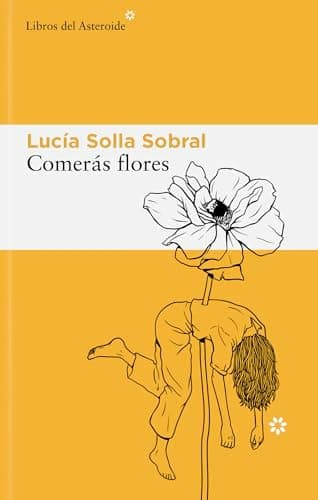
Book ReviewsComerás flores Review: Devastating Portrait of Quiet Abuse
Prices can sometimes be lower on bigger marketplaces, but this link helps independent bookstores and local reading communities.
Quick Verdict
Comerás flores by Lucía Solla Sobral is a brutally honest debut novel that dissects psychological abuse in romantic relationships with surgical precision. This isn't a thriller with dramatic reveals—it's something far more unsettling: a slow-motion chronicle of how love transforms into control, told through the voice of a woman who doesn't fully realize it's happening until the damage is done. If you're looking for a comfortable read, look elsewhere. If you want fiction that mirrors reality with unflinching clarity, this book demands your attention.
What This Book Actually Does
Marina is freshly grieving her father and newly graduated when Jaime enters her life—a sophisticated man twenty years her senior who floods her world with attention, fine dining, and a lifestyle that feels like stepping into adulthood itself. The premise sounds romantic on the surface. It reads like one for the first fifty pages. Then Solla Sobral begins the slow, methodical dismantling of that illusion.
This isn't a story about a villain. It's a story about a man who appears cultured, generous, and devoted—and who simultaneously erodes his partner's sense of self through relentless criticism disguised as care, through isolation disguised as romance, and through control disguised as love. Marina's best friend Diana becomes a distant memory. Her concerts and spontaneous nights out vanish. Her body becomes a subject of commentary. Her choices shrink to fit his preferences.
The genius of Solla Sobral's approach is that she never frames these moments as abuse. She frames them as love—which is precisely how they feel to Marina, and precisely how they feel to anyone living through this dynamic in real life.
The Writing: Deceptively Quiet, Devastatingly Effective
Lucía Solla Sobral writes in a voice that oscillates between lyrical delicacy and visceral rawness—and that tension is intentional. Marina's narration feels intimate, confessional, like she's telling you something in a whisper that she's terrified to admit aloud. There are no dramatic confrontations. No explosive arguments. Instead, there's a creeping discomfort, a growing sense that something is fundamentally wrong even as the world around Marina continues to applaud.
The prose has the rhythm of conversation—informal, punctuated with Marina's internal contradictions. She knows things aren't right. She doesn't know. She knows but can't articulate it. She articulates it but doesn't believe herself. This isn't sloppy writing; it's precise documentation of cognitive dissonance.
The supporting characters—Diana, Frida, Martín, Bea—function as anchors to Marina's former self, reminders of who she was before Jaime. Their presence, even in absence, carries weight. They're not developed with elaborate backstories, but they don't need to be. They represent oxygen, as one reader noted. They represent choice.
What Works Brilliantly
The novel's greatest strength is its refusal to sensationalize. Jaime isn't a monster. He's not violent. He doesn't scream or threaten. He's the kind of man who exists in abundance in real life—accomplished, charming, convinced of his own superiority, incapable of seeing his partner as a fully autonomous person. This makes the book infinitely more dangerous and more valuable than a straightforward abuse narrative.
Solla Sobral also captures something rarely discussed in literature: the way eating disorders can develop as a symptom of psychological control. Marina's relationship with food becomes a battleground where Jaime's comments metastasize into something clinical and destructive. It's handled with specificity and horror.
The exploration of grief—Marina's loss of her father, her subsequent hunger for someone to fill that void, the way trauma makes us vulnerable to the wrong people—is woven throughout without becoming melodramatic. This context matters. It explains Marina without excusing Jaime.
Finally, the book's treatment of female friendship as a form of survival is remarkable. Diana isn't a supporting character who fades away—she's a lifeline, and the novel understands this with clarity that much contemporary fiction misses.
Where It Fractures
Not everyone will find this book as devastating as its most passionate advocates do. Some readers experience it as emotionally distant—compelling enough to read in one sitting, but without the gut-wrenching impact they anticipated. The pacing is deliberately flat, which serves the thematic purpose but can feel like watching someone slowly suffocate rather than experiencing the suffocation yourself.
There's also a question of whether the novel ventures into "commercial fiction for women in their thirties" territory—a category that, fairly or unfairly, some critics view as predictable. The character archetypes are recognizable. The trajectory, while executed well, follows a familiar pattern. If you've read My Year of Rest and Relaxation by Ottessa Moshfegh or Lessons in Chemistry by Bonnie Garmus, you'll recognize the DNA of contemporary literary fiction aimed at women processing complex emotional terrain.
Some readers also report frustration with Marina herself—not because she's poorly written, but because her passivity is so convincing it becomes almost unbearable to witness. This is a feature, not a bug, but it's worth knowing before you start.
Who Should Read This (and Who Shouldn't)
Read this if: You've experienced or witnessed psychological manipulation in a relationship. You want fiction that treats women's interior lives with respect. You're interested in how language and narrative voice can convey control and gaslighting. You appreciate novels that don't announce their themes but let them accumulate quietly. You're looking for contemporary Spanish literature that's being translated and gaining international recognition.
Skip this if: You need clear narrative resolution and character growth arcs. You prefer plot-driven stories with high stakes and dramatic turning points. You're in an active crisis and need escapism rather than confrontation. You find slow-burn narratives frustrating. You've recently exited a difficult relationship and need distance before engaging with this material.
The Polarization Question
This Comerás flores review exists in a landscape of wildly divided opinion. Some readers report that the book "arrasó"—devastated them, left them without words, changed how they understand relationships. Others found it competent but not revolutionary, readable but not transformative. The difference often comes down to whether the reader has lived through something similar.
Books that hit this nerve—that mirror lived trauma—will always polarize. The question isn't whether Comerás flores is objectively good (it is). The question is whether you're ready to read it. If you've been Marina, even partially, even for a moment, this book will find you. It will sit with you. It will make you think of someone and want to gift it to them with a note that says: This is what I couldn't explain.
Why This Matters Right Now
There's a cultural moment happening around the depiction of coercive control in literature and media. We're moving past the era of obvious villains toward the harder work of examining how harm operates through charm, through sophistication, through the language of love. Comerás flores is part of this necessary reckoning. It's not the first book to explore these themes—but Solla Sobral's execution is precise enough, and her voice distinct enough, that it feels essential rather than derivative.
The novel also matters because it's Spanish literature gaining international recognition and translation. The Spanish literary market has been producing sophisticated, psychologically acute fiction for years, and English-language readers are only beginning to catch up.
Final Verdict
8.5/10 — A debut that understands the difference between writing about abuse and writing like abuse feels: invisible, intimate, and inescapable until suddenly it isn't.