Category:
Book ReviewsChłopki Review: Brutal, Uncompromising, Divisive
Quick Verdict
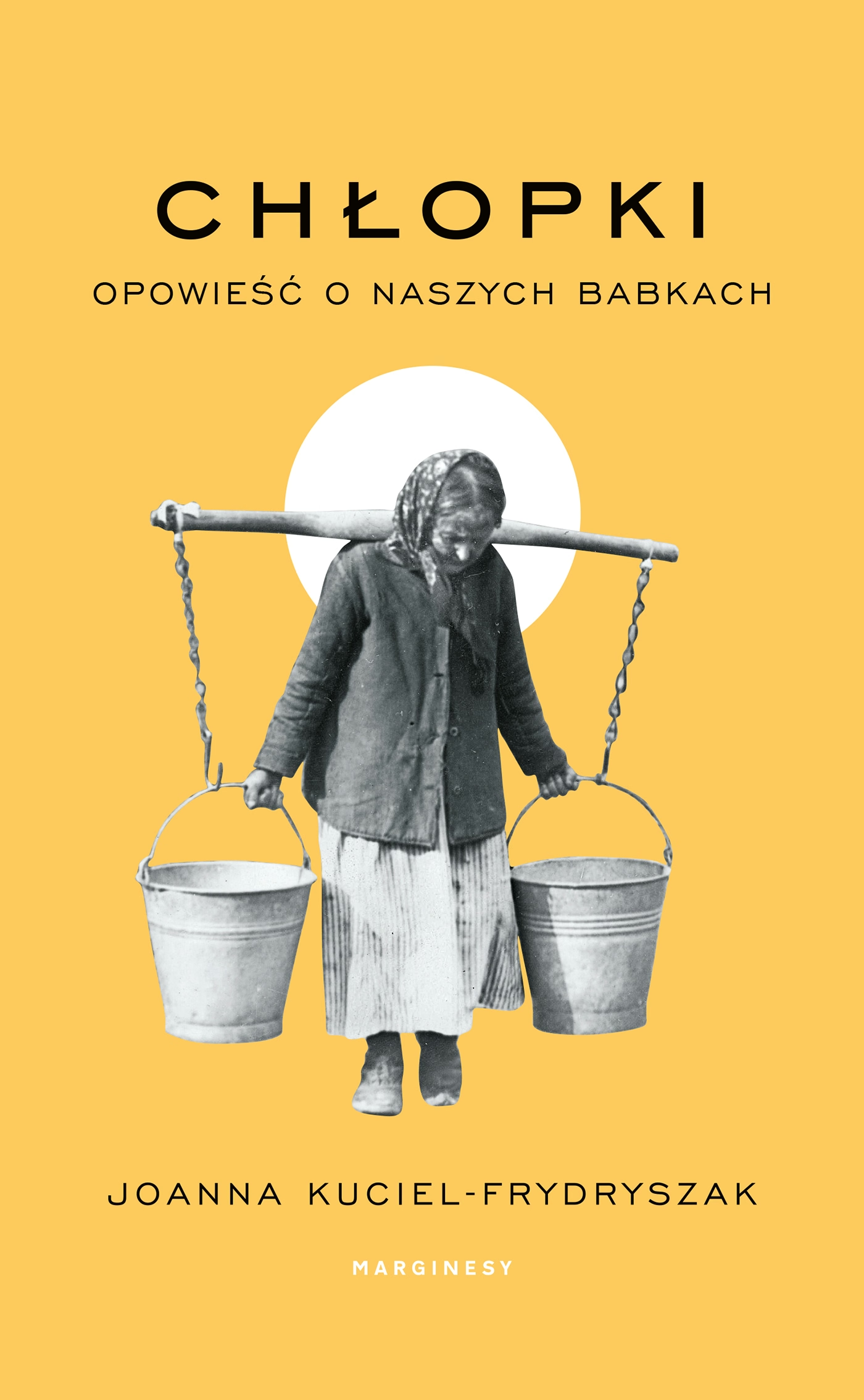
Chłopki. Opowieść o naszych babkach by Joanna Kuciel-Frydryszak is a powerful, unflinching reportage that gives voice to rural Polish women whose stories have been systematically erased from history. This isn't comfortable reading—it's deliberately confrontational, stripping away romanticized notions of village life to expose hunger, exploitation, and survival. The book has polarized readers dramatically: some call it life-changing; others argue it's tendentious propaganda dressed as historical documentation.
What This Book Actually Is
Kuciel-Frydryszak's Chłopki review material reveals something crucial that many readers miss: this isn't a balanced historical account. It's a deliberate intervention into how we remember rural women. Following her earlier work Służące do wszystkiego (Servants to Everything), the author returns to village life—but this time from the perspective of women who stayed behind while their sisters migrated to cities for domestic service.
The book reconstructs the daily reality of peasant women between the wars: farm laborers, wives, mothers, and daughters working from dawn to dusk in conditions of near-absolute poverty. Through archival research, oral histories, and historical documentation, Kuciel-Frydryszak builds a portrait of women who were often illiterate, perpetually pregnant, frequently abused, and entirely dependent on systems designed to exploit them.
This is not the "peaceful village" that Romantic-era poets imagined. This is territory marked by deprivation, violence, and systematic erasure.
The Structural Problem That Divides Readers
Here's where the Chłopki review consensus fractures: the book is deliberately one-dimensional. Some readers see this as appropriate moral clarity. Others see it as manipulative simplification.
The author makes a deliberate choice to show peasant women's lives through a single lens: survival under patriarchal capitalism. There are no nuances. No counterexamples of women who found meaning in faith, community, or family bonds. No acknowledgment that some women might have experienced their lives as something other than relentless tragedy. The book is structured to build a case—and cases require prosecutorial focus, not balanced representation.
One reader described it accurately: the book operates "under a single thesis" with "one optika" (perspective). This isn't accidental. It's the author's method. Whether you find this approach illuminating or reductive determines whether you rate this book 5 stars or 1 star.
What Actually Works Here
When Kuciel-Frydryszak commits to specific historical moments and voices, the book becomes genuinely gripping. The chapter on Polish women working in France—a documented historical phenomenon—provides concrete detail that transcends the broader argumentative framework. Readers consistently praised this section for balancing reportage with storytelling.
The emotional core lands hardest for readers with direct family connection to this history. Multiple reviewers noted being moved to tears, particularly those who recognized their own grandmothers in these accounts. The book's power derives partly from its refusal to soften its subjects' experiences with sentimentality. These were real women with real agency, even if that agency operated within crushing constraints.
The audiobook version, narrated by Maria Peszek, reportedly transforms the reading experience entirely. Peszek's voice apparently carries the emotional weight that some readers felt the text alone didn't fully convey. This is significant: the same words, performed differently, create a different book.
The Repetition Problem
Multiple readers flagged a structural weakness: the book repeats itself. Themes cycle through chapters without sufficient variation. Statistics appear without context. Some sections read like "tweets without commentary"—isolated facts that don't build toward anything. The organizational logic breaks down periodically, leaving readers disoriented about what theme they're supposedly exploring.
This isn't minor. A 1000-page reportage that could have been 600 pages without losing substance is a real problem. The padding dilutes impact. It transforms a powerful argument into something that feels occasionally like filler.
Who Should Actually Read This
Read this if: You're interested in Eastern European women's history. You want documentation of how rural communities actually functioned before industrialization. You have Polish family background and want to understand your ancestors' material conditions. You're researching gender and economic exploitation. You can tolerate—or even prefer—argumentative nonfiction that doesn't pretend to neutrality.
Skip this if: You expect balanced historical analysis. You want to feel uplifted. You're looking for nuanced representation of how people actually experienced their lives across different worldviews. You're fatigued by contemporary identity politics and see this book as operating within that framework. You want a narrative that respects its subjects' complexity rather than flattening them into symbols of oppression.
How This Compares
Think of Chłopki as occupying similar territory to works like The Second Sex by Simone de Beauvoir or The Beauty Myth by Naomi Wolf—texts that deliberately sacrifice balanced representation for argumentative force. Like those books, it's designed to change how you think about a category of people, not to offer comprehensive portraiture.
Unlike gentler historical works that aim for synthesis, Kuciel-Frydryszak's approach resembles prosecutorial documentation: here is what was done to these women, here is the system that enabled it, here is why you should be angry.
The Rating Paradox
The book's 4.42/5 average rating masks genuine disagreement. The 5-star reviews often come from readers who feel personally vindicated—their family histories finally documented and validated. The 1-star reviews come from readers who feel the book weaponizes suffering for ideological purposes.
Rarely do books generate this kind of polarization unless they're doing something significant. Whether that significance is positive or problematic depends entirely on your expectations.
Final Verdict
Chłopki. Opowieść o naszych babkach is worth reading if you understand what it is: a deliberate, argumentative intervention into how we remember rural women, not a neutral historical survey. The Chłopki review consensus among serious readers is that it's important work, even for those who find its methods reductive.
Is it good? That depends whether you value moral clarity over complexity. For readers seeking documentation of systemic exploitation and erasure, it's essential. For readers seeking nuanced historical understanding, it's a useful but incomplete resource that needs supplementation.
The real question isn't whether this book is "good"—it's whether you're willing to be challenged by a text that refuses to let rural women's suffering be abstract or sentimental.