Category:
Book ReviewsBom Dia, Inverno Review: Survival Becomes Self-Discovery
Prices can sometimes be lower on bigger marketplaces, but this link helps independent bookstores and local reading communities.
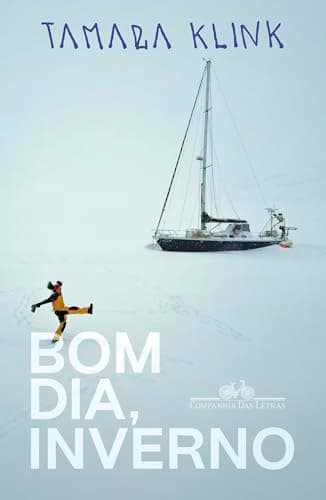
Tamara Klink's Bom Dia, Inverno is a deceptively intimate expedition narrative that trades the adrenaline of ocean crossings for the profound stillness of Arctic isolation. This isn't a book about conquering nature—it's about surrendering to it, and that distinction matters enormously for readers expecting another high-seas thriller from the author of Nós, o Atlântico em Solitário.
Klink spent eight months alone aboard her sailboat, frozen into a Greenlandic fjord during the polar winter, enduring months of near-total darkness and temperatures that would kill most humans within hours. What emerges from this experience isn't a survival manual or a technical account of maritime endurance. Instead, Bom Dia, Inverno functions as a philosophical meditation on solitude, freedom, and what happens to the human mind when stripped of society's constant noise.
What This Book Actually Is
This is not a narrative about overcoming obstacles through willpower and preparation. Klink's Greenlandic winter project deliberately removes the external conflict that typically drives adventure memoirs. There are no storms to battle, no rival navigators, no race against time. The drama here is internal—psychological, emotional, existential.
The book documents Klink's daily existence in radical isolation: the arrival of the polar night, encounters with Arctic wildlife (particularly a fox named Helena that becomes an unlikely companion), the visual spectacle of the aurora borealis, and the crushing weight of silence. She observes how the frozen sea transforms her environment, how her body adapts to perpetual darkness, and how consciousness itself shifts when removed from the tyranny of productivity and social obligation.
What makes this work as literature rather than mere expedition documentation is Klink's willingness to interrogate her own motivations. Why does she choose this? What is she running from or running toward? These questions permeate the narrative without ever feeling self-indulgent.
The Writing: Accessible Without Being Simplistic
Readers familiar with Klink's previous work note that Bom Dia, Inverno abandons the technical minutiae that bog down Nós—the nautical specifications, the boat construction details, the granular sailing logistics. This is a deliberate stylistic choice, and it works brilliantly for this particular story.
Klink's prose is conversational and immediate, designed to make you feel present in the fjord alongside her. She employs onomatopoeia and sensory description liberally, which some readers find charming and others find slightly precious. The writing never becomes purple or overwrought, though it occasionally flirts with whimsy in its observations of wildlife and weather.
The real strength lies in how she captures temporal disorientation. When the sun disappears for months, how do you mark time? How do you maintain identity when there's no one to perform for? Klink articulates these experiences with crystalline clarity, making the abstract feel visceral.
Where This Book Succeeds
Authentic solitude narrative: Unlike many isolation memoirs that feel performative or designed to inspire, Klink's account rings true. She admits to fear, boredom, and moments of genuine despair alongside the transcendent experiences. This honesty is rare.
Feminist undertones without preaching: The book quietly explores what voluntary solitude means for a woman in a culture that often pathologizes female independence. Klink describes her chosen isolation as liberating precisely because it's chosen—not imposed by circumstance or tragedy. This distinction carries weight.
Environmental consciousness: Observations about climate change and the Arctic's transformation emerge naturally from her experience rather than feeling grafted onto the narrative. She witnesses the consequences of global warming firsthand, and this grounds her reflections in concrete reality.
Philosophical accessibility: Klink raises genuine questions about how we live, what we value, and whether constant connectivity serves us. These meditations could feel preachy, but they don't. They're offered as observations, not prescriptions.
What Doesn't Quite Work
The book's greatest weakness is also its defining feature: the absence of external conflict. Some readers will find the contemplative pacing meditative; others will find it slow. There's genuinely no "plot" in the traditional sense—things happen (wildlife encounters, weather changes, seasonal transitions), but they're not obstacles to overcome so much as phenomena to observe.
The writing occasionally drifts into territory that feels slightly too casual or cute for the gravity of the subject matter. Certain passages employ a tone that doesn't quite match the existential weight of what's being described, creating tonal friction.
Additionally, readers coming to this book expecting the inspirational arc of Nós—the underdog narrative of a young woman achieving the impossible—may feel let down. This book resists that framework entirely. It's quieter, less triumphant, more ambiguous about whether the experience "succeeded" in any conventional sense.
Who Should Read This
Perfect for: Readers who loved Cheryl Strayed's Wild or Jon Krakauer's Into the Wild but wanted something less concerned with external achievement and more focused on internal transformation. Ideal for anyone interested in feminist philosophy, climate change, or unconventional approaches to self-discovery. Works beautifully for people who already admire Klink's work and want to see her evolve as a writer.
Probably not for: Readers seeking action-driven adventure narratives. Anyone who wants a clear inspirational arc or motivational takeaway. People who found Nós too technical and expect this to be more accessible in that same vein—it's actually quite introspective. Readers uncomfortable with extended passages about psychological struggle and existential questioning.
The Verdict
Bom Dia, Inverno is absolutely worth reading, but with caveats about what kind of book it actually is. This isn't Into the Wild or even Nós—it's closer to Sylvia Plath's journals or Rachel Carson's essays: a record of one person's consciousness confronting silence, solitude, and the natural world's indifference to human ambition.
Tamara Klink's eight-month Arctic winter becomes a lens through which to examine how we live, what we avoid through busyness, and whether the examined life is actually worth the discomfort of examination. The book doesn't answer these questions; it simply asks them beautifully.
The 4.58-star rating reflects genuine reader satisfaction, though the range of responses reveals that this book's contemplative approach won't resonate with everyone. That's not a flaw—it's a feature. The best books don't appeal to everyone; they appeal specifically to the right people.
If you're drawn to quiet narratives about radical self-confrontation, if you find beauty in Arctic landscapes and philosophical uncertainty, if you're interested in what freedom actually costs—read this book. If you want another rollicking adventure story from Klink, wait for her next ocean crossing.
Final Score
8.5/10 — A profound meditation on solitude that sacrifices plot momentum for psychological depth, resulting in a rare book that actually earns its philosophical ambitions.