Category:
Book ReviewsBlood of Truth and Traitors Review: Epic But Uneven
Prices can sometimes be lower on bigger marketplaces, but this link helps independent bookstores and local reading communities.
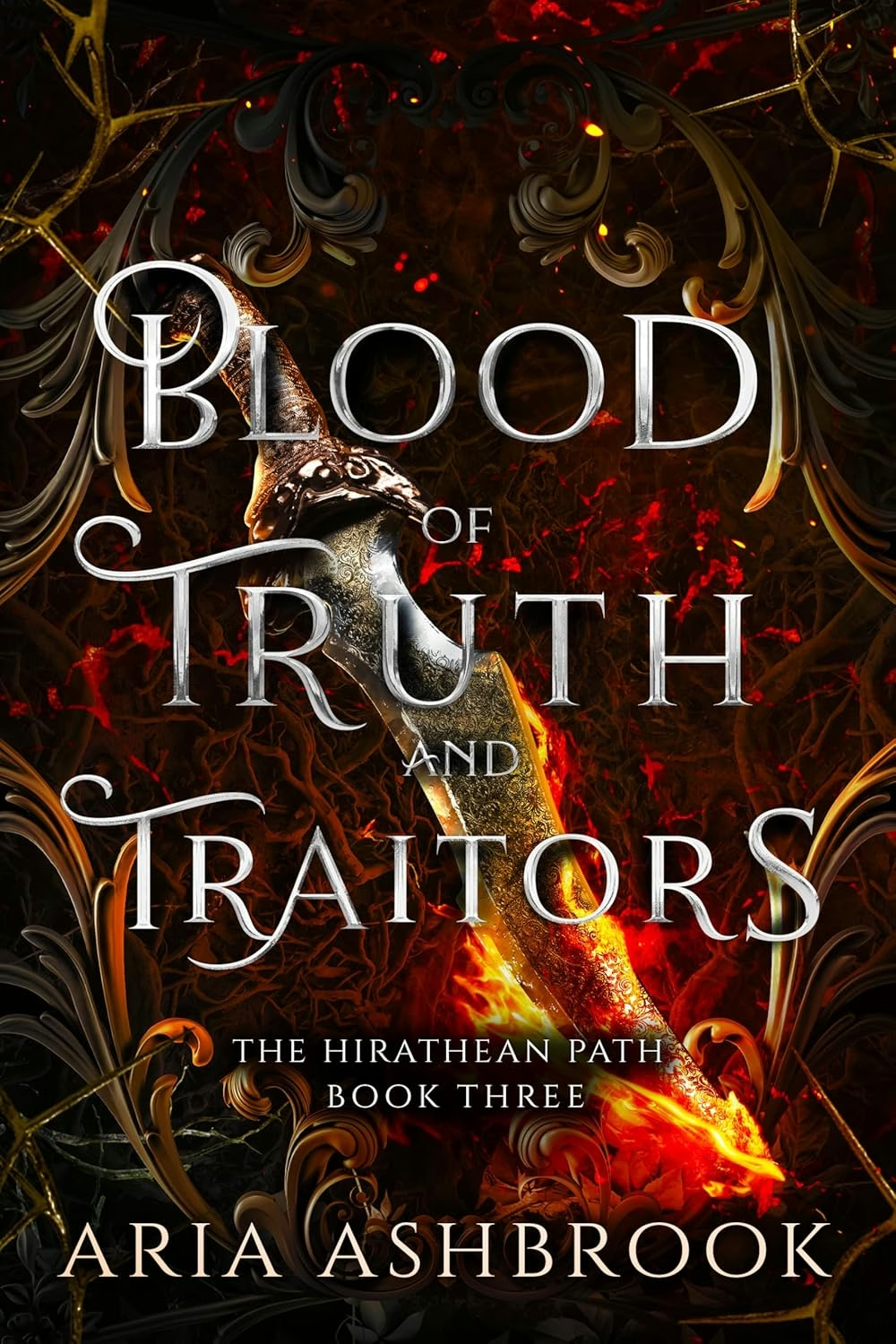
Aria Ashbrook's Blood of Truth and Traitors is the third installment in the Hirathean Path series, and it's a book that refuses to sit comfortably in anyone's hands. With a 4.47/5 rating across nearly 5,000 reviews, this romantasy delivers genuine emotional devastation and world-expanding intrigue—but stumbles when it matters most. Here's the critical truth: this book is simultaneously one of the strongest entries in a genre oversaturated with predictable tropes and a cautionary tale about what happens when authors prioritize shock value over narrative coherence.
Quick Verdict
Blood of Truth and Traitors is worth reading if you're invested in Rose's journey and can tolerate uneven pacing. The emotional gut-punches land hard, the found family dynamics are genuinely affecting, and Ashbrook expands the world in ways that matter. However, this Blood of Truth and Traitors review must acknowledge that the central romance feels strained, plot holes accumulate in the second half, and some twists telegraph themselves so obviously they lose their impact.
What This Book Actually Does
Rose Kultavaris arrives in Issen, the hidden city of ice and knowledge that contradicts everything she's been taught. She's tasked with completing a Rite to gain rank while navigating vows that prevent anyone from speaking truth—a clever constraint that becomes both the book's greatest asset and its most frustrating limitation. The stakes escalate when prophecy and war converge, forcing Rose to confront that destiny didn't just choose her; it made her.
This premise works. The world-building expands meaningfully, introducing new magic systems and cultures that feel lived-in rather than window-dressing. The Issen themselves are portrayed with cultural specificity that elevates them beyond "mysterious enemy faction." Ashbrook clearly spent time thinking about how societies function when built on fundamentally different values than the kingdoms Rose knows.
The Emotional Weight That Actually Lands
Where Blood of Truth and Traitors genuinely excels is in its treatment of grief and consequence. This series doesn't perform stakes—it lives them. Characters have lost people. They carry that loss visibly. One particular line from a character about their personal grief reportedly moved readers to tears, and that's not hyperbole; it's the mark of writing that understands emotional resonance.
The found family dynamic is the beating heart here. Readers consistently report feeling protective of these characters, wanting "only happiness and rainbows and sunshine for them" while knowing the narrative will deny them that comfort. That's the hallmark of character work done right. Rose's relationship with Fen expands in ways that feel organic, and secondary romances beginning to emerge add texture without overshadowing the primary narrative.
The audiobook narration deserves specific mention. While Anthony Palmini receives well-deserved praise in romantasy circles, Amanda Leigh Cobb's performance in this installment is genuinely soaring. If you're considering the audio format, it's worth the investment.
Where the Narrative Fractures
But here's where this Blood of Truth and Traitors review must get honest: the back half of the book is a masterclass in escalation that occasionally sacrifices logic for spectacle. The action sequences are undeniably gripping—readers report audibly gasping—yet some of the plot twists feel manufactured. When authors prioritize shocking readers over serving the story, it shows. Predictable twists masquerading as surprises undermine the tension they're meant to create.
The central romance between Rose and Kyor is the most divisive element. Their chemistry fundamentally feels different from books one and two, creating cognitive dissonance for readers emotionally invested in their arc. Kyor's character development is solid, but the dynamic between them strains under the weight of vows and secrets that could theoretically be resolved through direct conversation. Ashbrook acknowledges this narrative device works—and it does, technically—but the execution sometimes feels like characters making poor choices to serve plot rather than plot emerging naturally from character.
Plot holes accumulate without resolution. Some reveals feel unnecessary rather than revelatory. The repetition of certain narrative beats that worked in earlier books begins to feel like formula rather than fate.
Who This Book Is Perfect For (And Who It Isn't)
Blood of Truth and Traitors is essential reading if you love romantasy with genuine stakes and aren't bothered by unresolved tension. If you adore Fourth Wing's world-building expansion or The Serpent and the Wings of the Night's slow-burn intensity, this delivers on that promise. Fans of found family narratives and complex grief will find much to love.
Skip this if you need tight plotting and consistent character chemistry throughout. If you found Blood of Truth and Traitors book two satisfying, book three's tonal shift might disappoint. Those seeking resolution over continued cliffhangers should wait for the final installment.
The Verdict on Spice and Pacing
The medium-level spice content serves the relationship rather than distracting from it, which is refreshing. However, pacing becomes increasingly uneven as the book progresses. The first two-thirds move deliberately, building tension through training sequences and world exploration. The final 40% explodes into action that's thrilling but occasionally feels rushed in ways that leave narrative threads dangling.
Is Blood of Truth and Traitors Worth Reading?
Yes—with caveats. This is book three of four, so approaching it as a complete narrative rather than a standalone experience is essential. The emotional payoffs are genuine, the world-building is sophisticated, and the character work mostly justifies the setup. The flaws are real but not fatal. This book works best for readers who've already committed to the series and can tolerate imperfection in service of ambition.
Aria Ashbrook's Blood of Truth and Traitors proves that even flawed romantasy can move readers deeply. It's not perfect, but it's never boring. That's worth something in a genre increasingly defined by formula.
Final Thoughts
This Blood of Truth and Traitors review concludes that Ashbrook remains a writer capable of genuine emotional devastation and world-building that respects reader intelligence. The third book doesn't quite reach the heights of the first, but it doesn't collapse under its own ambition either. It exists in the complicated middle ground where most real books live—imperfect, frustrating, occasionally brilliant, and absolutely worth your time if you know what you're signing up for.
Final Score: 7.5/10 — A solid romantasy entry that delivers emotional weight and world-expansion but stumbles on consistency and character dynamics.