Category:
Book ReviewsBittersweet Review: Profound Yet Frustratingly Unfocused
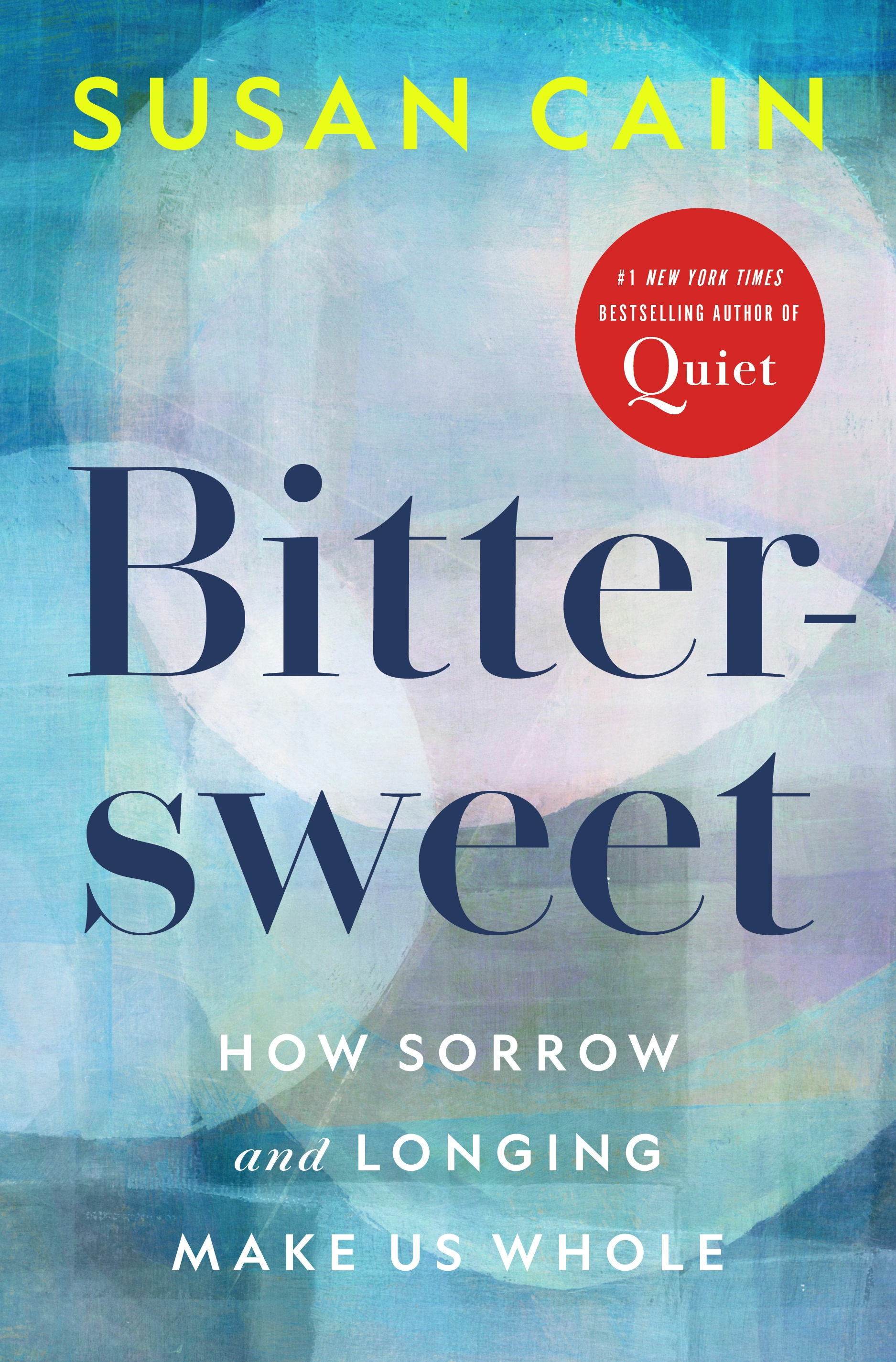
Prices can sometimes be lower on bigger marketplaces, but this link helps independent bookstores and local reading communities.
Susan Cain's Bittersweet: How Sorrow and Longing Make Us Whole arrives with the weight of expectation. Following the cultural phenomenon of Quiet, which fundamentally shifted how we understand introversion, Cain returns with an ambitious thesis: that embracing sorrow and longing—rather than pursuing relentless positivity—is essential to human flourishing. It's a compelling premise. Yet this Bittersweet review reveals a book that starts brilliantly but gradually loses its moorings, leaving readers divided about whether they've encountered profound wisdom or elaborate rambling.
Quick Verdict
Cain's exploration of bittersweetness as both emotional state and way of being contains genuinely valuable insights about creativity, compassion, and human connection. However, the book's structural inconsistency and tendency toward spiritual meandering undermine its psychological rigor. If you loved Quiet, this will disappoint. If you're seeking a rigorous psychological exploration of sorrow, look elsewhere. The book works best as a philosophical memoir rather than the definitive guide it pretends to be.
What This Book Actually Attempts
Bittersweetness, as Cain defines it, isn't mere sadness. It's a particular orientation toward life—one that recognizes the simultaneous presence of beauty and transience, joy and loss. Think of the minor-key melody that haunts you, the elegiac poem that moves you to tears, the commercial that inexplicably touches your heart. Cain argues this isn't a flaw in human psychology but rather a profound capacity we've systematically devalued in favor of relentless optimization and positivity culture.
The book promises to explore how this bittersweet sensibility connects to creativity, leadership, spirituality, and our capacity for empathy. On paper, this is essential cultural criticism. Our society's obsession with happiness metrics and productivity optimization has created a strange void—we've pathologized sadness while simultaneously producing art that celebrates melancholy. Cain positions herself to bridge this gap.
Where Bittersweet Succeeds
The book's strongest sections arrive early, when Cain grounds bittersweetness in concrete examples and research. Her discussion of how different artistic traditions—from Japanese aesthetics to Irish poetry to American spirituals—have long recognized sorrow's redemptive power feels genuinely illuminating. The research here is solid, drawing on musicology, neuroscience, and literary history to argue that bittersweetness isn't new; we've simply forgotten its value.
Cain's personal revelations also land with force. Her vulnerability about maternal loss and pandemic grief creates genuine intimacy with readers. These moments remind us why we connected with Quiet in the first place—Cain's willingness to weave memoir into analysis makes abstract concepts feel lived and urgent.
The book's central argument—that acknowledging collective suffering creates kinship rather than isolation—remains timely and necessary. In an era of profound discord and anxiety, this message carries weight. If we recognize that all humans experience loss, we might extend more compassion to one another.
The Critical Problem: Structural Collapse
Here's where this Bittersweet review must acknowledge a significant flaw: the book loses coherence roughly halfway through. Cain begins with psychological and artistic foundations, but gradually pivots toward spiritual territory without clearly signposting this shift. Readers report confusion about how certain chapters connect to the central thesis. A discussion of religious traditions, while interesting, feels tangential rather than essential.
Moreover, Cain repeatedly insists she's "not religious," yet the book increasingly adopts spiritual language and frameworks. This contradiction creates cognitive dissonance. Either embrace the spiritual dimension fully or maintain rigorous secular analysis—the middle ground feels evasive and confusing.
The book also suffers from what might be called "thesis repetition without development." Cain makes her core argument clearly in the first third, then spends the remaining pages circling back to similar points without advancing them. This works in memoir but feels pedagogically weak in a book positioned as both self-help and philosophical treatise.
Writing Style: Engaging but Scattered
Cain's prose remains accessible and warm, never condescending. She has a gift for finding the perfect cultural reference or personal anecdote to illustrate abstract concepts. The audiobook version, reportedly enhanced by a curated "Bittersweet playlist," suggests Cain understands how to engage readers across formats.
However, accessibility doesn't excuse lack of structure. A book about longing and loss should itself demonstrate architectural precision. Instead, readers report feeling untethered, unsure how individual chapters build toward a larger argument. Compare this to Quiet, which methodically constructed its case through research, counterargument, and synthesis. Bittersweet feels more like a collection of related essays than a unified work.
The Expectation Gap
Many readers approached this book expecting rigorous psychological analysis—a deep exploration of how sorrow neurologically and psychologically affects us. What they received instead was part memoir, part spiritual philosophy, part self-help. This isn't inherently problematic, but the marketing and framing suggest otherwise.
Cain's refusal to pathologize bittersweetness as depression is genuinely valuable. The distinction between clinical depression and a contemplative, melancholic disposition matters. Yet the book doesn't go deep enough into the neuroscience or psychology to satisfy readers seeking that rigor. It gestures toward psychology without fully delivering it.
Who Should Read This
Perfect for: Introverts who loved Quiet and want to deepen their self-understanding. Creatives seeking validation for their melancholic sensibilities. People grieving or processing loss who want philosophical framework for their experience. Readers interested in cultural history of sadness across artistic traditions.
Will disappoint: Those seeking rigorous psychological analysis. Readers who want a tightly structured argument rather than exploratory rambling. Anyone expecting Quiet 2.0. People looking for practical tools or concrete exercises (the book offers few).
Comparison to Similar Works
If you're deciding between Bittersweet and comparable books, consider this: The Courage to Be by Paul Tillich offers deeper philosophical rigor on existential themes. Man's Search for Meaning by Viktor Frankl provides more concrete psychological frameworks for finding purpose through suffering. The Art of Asking by Amanda Palmer explores creativity and vulnerability with better structural coherence. Bittersweet occupies middle ground between these—less rigorous than philosophy, less practical than self-help, less focused than memoir.
The Rating Question: Is It Worth Reading?
Yes, but with caveats. Bittersweet contains genuinely valuable observations about human nature and the redemptive power of acknowledging sorrow. For readers already sympathetic to Cain's worldview, it will feel validating and enriching. The book's central thesis—that bittersweetness is a capacity worth cultivating rather than a symptom to cure—remains countercultural and necessary.
However, the book's structural problems and tonal inconsistencies prevent it from being the definitive work it aspires to be. It reads like Cain had multiple books' worth of material and didn't fully integrate them. A more ruthless editor might have produced something more powerful.
Final Verdict
Susan Cain's Bittersweet is a flawed but earnest exploration of why we're drawn to sadness and longing. It succeeds as memoir and cultural commentary but falters as psychological analysis or self-help guide. The book's insights about creativity, compassion, and human connection feel authentic and timely. Yet its scattered structure and unresolved tension between secular and spiritual frameworks undermine its impact.
This is a book that will resonate deeply with some readers and frustrate others—and both responses are justified. It's worth reading if you're willing to extract the valuable passages and forgive the meandering path to reach them. But it's not the essential follow-up to Quiet that many hoped for.