Category:
Book ReviewsBecause I Killed Him Review: A Dystopian
Prices can sometimes be lower on bigger marketplaces, but this link helps independent bookstores and local reading communities.
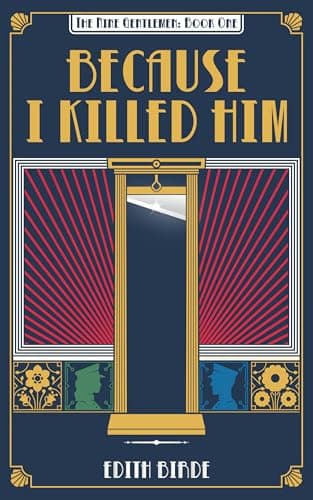
Edith Birde's debut novel Because I Killed Him arrives with serious ambition: a dystopian romance that swings for the fences with world-building, political intrigue, and a slow-burn love story that genuinely lands. This indie-published fantasy-dystopia hybrid has earned a 4.48/5 rating from nearly 16,000 readers, and the verdict is clear—the hype is mostly justified, though this book demands patience from its audience.
The premise alone is magnetic: in a society where gold-plated guillotines still function as instruments of state control, survival depends entirely on being in the right inner circle. Low-citizens trade autonomy for protection; high-citizens trade wealth for power. Our protagonist, Loredana Waldsten, is a disgraced fencing prodigy forced into an elite university where the rules are rigged against her. When a forced alliance with Edmund Prew—a high-citizen from a rival family—begins to shift into something dangerously romantic, the stakes become personal and lethal.
What It's About
The Civilized World operates on a brutal credit system where social class determines not just lifestyle but legality itself. Speaking out of turn, wearing the wrong clothes, adopting the wrong posture—these aren't social faux pas; they're capital crimes. The wealthy exist in champagne-soaked isolation while the lower classes navigate a minefield of arbitrary rules designed to keep them compliant.
Loredana's backstory is the novel's secret weapon: she already killed a high-citizen and got away with it because his family chose to erase his death rather than face the shame. Now, as her father openly challenges the system, she becomes a target. Her only protection is Edmund, a ruthless charmer whose family has warred with hers for years. What begins as a strategic arrangement transforms into something neither of them anticipated—genuine connection in a world designed to prevent it.
The mystery that drives the plot is whether Edmund will ever discover the truth about the man Loredana killed, and whether that knowledge would make him her protector or her executioner.
The World-Building: Where This Book Shines
Edith Birde's greatest strength is her commitment to a genuinely original dystopia. This isn't another dystopia wearing a thin disguise; the credit-based class system feels both unnerving and internally consistent. The 1920s-meets-futuristic aesthetic creates a world that's visually distinct from the crowded dystopian marketplace. Readers consistently praise the lushness of this world-building—it's the kind of setting that makes you believe in the rules even as you're horrified by them.
The Grandmaster University serves as the perfect pressure cooker for the romance and political conflict. It's simultaneously an elite academy, a battleground for class warfare, and a stage where one wrong move means public execution. This setting transforms what could have been a generic forbidden romance into something with genuine teeth.
The Romance: Slow-Burn That Actually Burns
For the first 40% of the book, readers report feeling impatient for the romance to materialize. This is fair criticism—Birde prioritizes world-building and character positioning over early romantic tension. However, once the relationship between Loredana and Edmund ignites, it becomes genuinely consuming.
What makes this romance work isn't passion-at-first-sight but the collision of two people from opposing worlds who discover unexpected vulnerability in each other. Edmund's acts of service as his love language, his willingness to compromise his position for Loredana's safety, and the genuine tenderness that emerges between them—these details create a romance that feels earned rather than manufactured.
The tension isn't just romantic; it's existential. Loredana is literally forbidden by law to defend herself, making Edmund her only shield. That dynamic creates constant psychological pressure that elevates the relationship beyond typical dystopian romance tropes.
What Works Exceptionally Well
The political intrigue feels authentic and consequential. This isn't a backdrop; it's the engine driving every character decision. Loredana's father's public challenge against the system has real consequences that ripple through the entire narrative.
Character consistency is another strength. Loredana is stubborn, prideful, and fierce—but also constrained by her circumstances in ways that feel realistic rather than frustrating. She can't fight back physically, so she fights with intelligence and strategy. Edmund's ruthlessness is balanced by genuine loyalty to those he loves, creating a character who's simultaneously charming and dangerous.
The pacing after the 40% mark becomes genuinely compulsive. Multiple readers report losing sleep, unable to put the book down once the central conflict fully emerges. This suggests Birde understands how to escalate tension and maintain momentum when the stakes are clear.
The Legitimate Criticisms
The pacing problem in the first 40% isn't a minor issue—it's substantial enough that it affects the reading experience measurably. Birde takes considerable time establishing the world and positioning characters, and while this world-building is beautiful, some sections feel unnecessarily extended. The long chapters compound this problem; readers specifically mention wishing for tighter, more modular structure.
Predictability undermines some subplots. The Charlotte/Jack/Edmund mystery is telegraphed early, and readers see the resolution coming from considerable distance. This doesn't derail the main plot, but it does reduce the sense of surprise in moments that should land harder.
The lack of multiple perspectives is a tactical choice that mostly works but creates frustration. Edmund's POV is notably absent, which maintains mystery around his motivations but leaves readers yearning for his internal experience. This is a design decision rather than a flaw, but it's worth noting as a limitation.
Repetition in the middle sections suggests this book could have been tightened by 15-20% without losing substance. Some emotional beats are revisited more than necessary, and certain scenes feel like variations on themes already established.
Who Should Read This Book
Perfect for: Readers who loved the political intrigue of The Poppy War combined with the romance of Cruel Beauty. If you appreciate slow-burn romance, dystopian settings with genuine stakes, and characters who have to think their way out of problems rather than fight their way out, this is your book. Fans of academy settings with high-stakes consequences will find genuine satisfaction here.
Potentially frustrating for: Readers who demand immediate romantic tension in romance-forward narratives. If you're unwilling to invest 40% of a 400+ page book before the central relationship accelerates, this will test your patience. Similarly, readers who prefer tight, fast-paced narratives without extensive world-building exposition may find the opening chapters laborious.
Comparing to Similar Works
Because I Killed Him occupies interesting space between The Cruel Prince (fantasy with political stakes and forbidden romance) and Scythe (dystopian world-building with moral complexity). It's more romance-focused than Scythe but more politically sophisticated than many romantasy offerings. The world-building is richer than typical dystopian romance, but the pacing occasionally mirrors the slower burn of literary fantasy rather than the propulsive energy of commercial romantasy.
The Verdict: Is It Worth Reading?
Yes, Because I Killed Him is absolutely worth reading, particularly if you have patience for a novel that asks for investment before delivering its payoff. Edith Birde has created a genuinely original dystopia with characters who feel real and a romance that earns its emotional weight. The first 40% is interesting but uneven; the remaining 60% is genuinely compelling.
This is a book that improves significantly in retrospect. Once you reach the accelerated final two-thirds, you'll likely want to revisit earlier sections with new understanding. That's the mark of solid world-building and character work.
Final Score
8.5/10 — Exceptional world-building and romance undercut by uneven pacing that demands patience but ultimately rewards it.