Category:
Book ReviewsBeautiful World, Where Are You Review: Divisive Brilliance
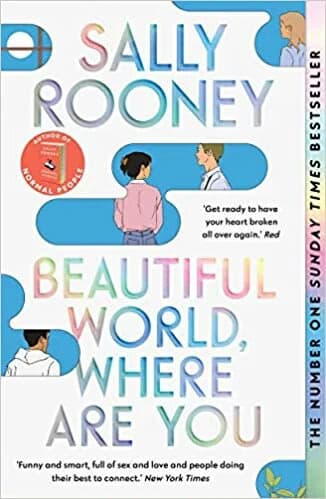
Prices can sometimes be lower on bigger marketplaces, but this link helps independent bookstores and local reading communities.
Sally Rooney's third novel, Beautiful World, Where Are You, arrived in 2021 as one of the most polarizing literary releases in recent memory. The book has fractured readers into two distinct camps: those who consider it her most mature and intellectually sophisticated work, and those who find it pretentious, emotionally cold, and frustratingly plotless. This Beautiful World, Where Are You review cuts through the noise to examine what actually makes this book work—and why it spectacularly fails for so many intelligent readers.
Quick Verdict
Rooney's latest is a book about nothing that somehow feels like everything. Four characters in their late twenties navigate sex, relationships, class anxiety, and climate despair through conversations that rarely include quotation marks and scenes where characters say nothing for entire paragraphs. If you loved Normal People, you'll likely find this more intellectually ambitious but emotionally distant. If you found her previous work frustrating, this will test your patience further.
What It's Actually About
Alice, a successful novelist, impulsively invites Felix—a warehouse worker she barely knows—to travel to Rome. Meanwhile, in Dublin, her best friend Eileen reconnects with Simon, a man she's known since childhood. The plot, such as it is, follows these four people as they orbit each other's lives, have sex, worry about whether they're good people, and discuss whether beauty exists in a world facing climate collapse.
There's no dramatic arc here. No inciting incident that propels the narrative forward. Instead, Rooney offers something deliberately anti-climactic: the mundane texture of contemporary adult life, where the most significant events are conversations that don't quite happen and silences that speak louder than dialogue.
The Writing Style: Minimalism as Method
Rooney's prose in Beautiful World, Where Are You is clinical, stripped of ornament, and deliberately emotionally restrained. Dialogue appears without quotation marks, characters respond in flat tones, and physical descriptions are sparse. This isn't laziness—it's a deliberate aesthetic choice that forces readers to excavate meaning from what's unsaid.
The style works when you surrender to it. Rooney captures the particular anxiety of millennial life: the awareness of privilege alongside climate dread, the performance of authenticity on social media, the gap between how we present ourselves and who we actually are. The precision of her observation is genuinely masterful. She notices things—the way someone blinks before admitting something vulnerable, the specific texture of awkwardness in a conversation between former lovers—that feel absolutely true.
But this same style becomes suffocating for readers seeking emotional resonance. When every character speaks in measured tones, when physical reactions are muted and internal lives remain opaque, the cumulative effect can feel anemic rather than profound.
What Works: Intellectual Depth and Authenticity
The strongest element of Rooney's work here is her integration of serious ideas into intimate narratives. Characters don't simply exist; they think about their existence. They debate whether novels about relationships matter in a world facing ecological catastrophe. They interrogate their own complicity in systems of exploitation. They worry about whether they're good people—not in a performative way, but with genuine uncertainty.
This intellectual dimension elevates the book beyond simple relationship drama. Rooney refuses to let her characters off easy. Alice's success as a novelist becomes a vehicle for exploring questions about art, privilege, and cultural capital. The class difference between Alice and Felix creates genuine tension that neither character can fully articulate or resolve.
The Rome sequence is genuinely compelling—two people trying to connect across different communication styles and class backgrounds, failing and succeeding in turns. And the Eileen-Simon dynamic captures something real about how history and attraction complicate adult relationships.
What Doesn't Work: Emotional Distance and Pretension
The central problem with Beautiful World, Where Are You is that emotional distance, when weaponized as a narrative technique, can read as coldness. Readers report feeling a "hard lump in the back of their throat" while reading—not from genuine pathos, but from anxiety and discomfort. That's intentional, but it's also exhausting.
Moreover, the philosophical conversations, while intellectually interesting, can feel performative. Characters discuss climate anxiety and late capitalism with the self-consciousness of people aware they're having Important Conversations. There's a self-satisfied quality to some of the dialogue that undermines its apparent depth.
The lack of plot momentum becomes genuinely problematic in the final third. When nothing particularly happens and characters remain emotionally guarded even in moments of intimacy, readers may reasonably ask: why should I care? Rooney seems to assume that the mere act of observing human behavior is inherently interesting. Sometimes it is. Sometimes it feels like watching paint dry while someone lectures you about the ontology of paint.
Who Should Read This
Perfect for: Readers who loved Normal People and want something more intellectually ambitious. Literary fiction enthusiasts comfortable with ambiguity and minimalism. Anyone interested in how contemporary anxiety manifests in intimate relationships. Book club participants seeking discussion-worthy material. Readers who appreciate precision over sentimentality.
Will likely hate it: Readers seeking plot momentum or narrative satisfaction. Anyone who finds Rooney's style already frustrating. Readers who prefer emotional directness to emotional reticence. Those seeking escapism or comfort in their reading. Anyone allergic to characters who "say nothing" for pages at a time.
The Divisiveness Question
Why does this book inspire such polarized responses? Because Rooney has created a work that functions almost as a Rorschach test. Readers who value ideas over plot, observation over action, and stylistic precision over emotional catharsis will find Beautiful World, Where Are You revelatory. Readers who believe fiction should move them—make them feel something visceral—will find it frustratingly withholding.
This isn't a failure of the book. It's a reflection of Rooney's deliberate artistic choice to prioritize intellectual engagement over emotional satisfaction. The question isn't whether the book is "good"—it's whether you're willing to meet Rooney on her terms.
Comparison Point
If Normal People was Fleabag for literature—witty, emotionally raw, immediately engaging—then Beautiful World, Where Are You is more like watching a Lynchian drama where nothing quite resolves. It shares DNA with Kazuo Ishiguro's work in its emotional restraint and thematic depth, though Ishiguro typically rewards patience with genuine catharsis. Rooney largely withholds that reward.
Is Beautiful World, Where Are You Worth Reading?
Yes—but with caveats. This Beautiful World, Where Are You review recommends it for readers willing to engage with ambitious literary fiction that refuses easy answers or emotional manipulation. The book succeeds as an intellectual exploration of how we connect (and fail to connect) with others. It captures something true about contemporary anxiety and the gap between our public and private selves.
However, if you're reading for plot, character development in traditional terms, or emotional catharsis, you'll likely find it frustrating. Rooney's minimalism works brilliantly in short bursts but can become exhausting over 300 pages. The book's greatest strength—its refusal to provide easy answers—is also its greatest limitation.
Final Score
7/10 — A sophisticated, intellectually rigorous novel that succeeds at what it attempts, even if what it attempts isn't universally rewarding.