Category:
Book ReviewsAwake by Jen Hatmaker: Privilege Meets Reckoning
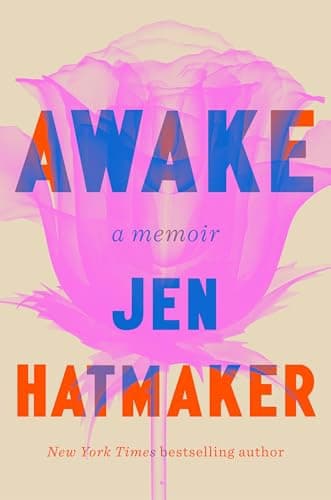
Prices can sometimes be lower on bigger marketplaces, but this link helps independent bookstores and local reading communities.
Jen Hatmaker's Awake is a brutally honest memoir about the implosion of her twenty-six-year marriage and the spiritual unraveling that followed. It's also deeply polarizing—celebrated by readers who see their own religious deconstruction reflected in its pages, and criticized by those who find the author's post-divorce "awakening" uncomfortably detached from the financial realities facing most single mothers.
Hatmaker's Awake review scores average 4.05 out of 5 stars across 50,000+ ratings, but the distribution tells a more complicated story than that number suggests. This isn't a book that inspires mild appreciation. It provokes strong reactions, and understanding why matters before you decide whether to pick it up.
The Core Story: When Everything Crumbles at 2:30 A.M.
On July 11, 2020, at 2:30 a.m., Hatmaker woke to find her husband Brandon whispering to another woman from their bed. That moment—specific, devastating, mundane in its horror—becomes the hinge on which this entire memoir turns. What follows isn't just a divorce narrative. It's a forty-year excavation of religious indoctrination, cultural conditioning, and the carefully constructed identity that collapsed the moment her marriage did.
Hatmaker had spent over a decade as a public figure urging millions of women toward authenticity and radical agency. She'd built a brand on helping others create healthy relationships. The irony isn't lost on her, and she doesn't shy away from it. The book opens with this contradiction front and center: here was someone who'd seemingly figured it out, suddenly unable to access her own bank accounts, medicated for anxiety and depression, parenting five children alone.
What makes this premise compelling is that Hatmaker refuses the redemption arc template. She doesn't position herself as having secretly known better all along. Instead, she interrogates the systems—evangelical Christianity, purity culture, patriarchal marriage structures, and the performance of perfection—that shaped her choices and kept her trapped.
What Works: The Religious Deconstruction Hits Hard
The strongest sections of Awake are those where Hatmaker examines her evangelical upbringing with surgical precision. She traces how church teachings about submission, obedience, and female sexuality created psychological architecture that made her vulnerable to manipulation and betrayal. She doesn't blame the church for her husband's infidelity, but she does blame it for teaching her that staying would be noble, that suffering was spiritual, that her needs were secondary to marital preservation.
This resonates powerfully with readers who've experienced similar religious trauma. The book validates a specific kind of pain: the shame of realizing you've been systematically misled by the institution that was supposed to protect you. Hatmaker names this clearly—it's not about self-blame, but about clarity. That distinction matters and gives the memoir moral weight it might otherwise lack.
Her writing is also genuinely funny. Hatmaker has a gift for absurdist humor that defuses heavy moments without trivializing them. She can describe a mortifying situation with enough comedic timing that you laugh while recognizing the tragedy underneath. This tonal balance keeps the book readable when it could otherwise feel like sustained emotional devastation.
The chapters about parenting five kids through her divorce are particularly strong. She doesn't pretend to have handled everything perfectly. She shows up as flawed, medicated, sometimes unavailable—and somehow that honesty is more useful than any parenting guru's polished advice.
What Doesn't: The Privilege Problem Is Real
Now for the tension that divides readers: Awake is fundamentally a book about a wealthy woman's self-discovery after divorce. Hatmaker acknowledges her financial security multiple times, but acknowledgment isn't the same as grappling with what it means.
Her post-divorce healing involves month-long "me-camps" in beautiful locations, spontaneous car purchases, home renovations facilitated by wealthy friends, and extended travel. These aren't frivolous details—they're central to her narrative of awakening. She frames self-care as radical and necessary, which it is. But for a single mother working two jobs, taking out loans for therapy, or choosing between medication and rent, Hatmaker's brand of self-love reads as abstract.
This isn't a reason to dismiss the book, but it's a legitimate criticism that deserves acknowledgment. The author's experience of sudden singlehood is categorically different from that of most women in similar circumstances. She had a safety net, professional support, and a platform that converted her pain into income. Most don't.
Additionally, some readers who followed Hatmaker's social media over the past five years report that Awake doesn't offer much new material. The book largely expands on themes she's already explored publicly online. If you've been tracking her Instagram posts and podcast episodes, the memoir can feel like extended footnotes rather than fresh revelation.
There's also a slight disconnect between Hatmaker's critique of evangelical culture and her relationship to it now. She's deconstructed the theology, but she still seems to operate from many of its emotional frameworks—guilt, redemption narratives, the need for moral clarity. The book would be stronger if it sat longer in ambiguity rather than rushing toward resolution.
Comparing the Landscape: Where Awake Sits
If you've read Glennon Doyle's Untamed or Rachel Held Evans' Inspired, you'll recognize the DNA here. All three are memoirs by women deconstructing evangelical Christianity while processing personal upheaval. But where Doyle's book is primarily about self-discovery and Evans' is more theological, Hatmaker's Awake review stands out for its specificity about marriage and its willingness to name complicity.
Unlike some spiritual memoirs that position the author as victim or hero, Hatmaker does something harder: she holds herself accountable for choices made within systems she now rejects. That nuance is valuable.
Writing Style and Structure
Hatmaker writes in accessible, conversational prose that reads like you're listening to a friend process out loud. She moves between timelines—childhood, marriage, the present moment—in ways that illuminate how past patterns shaped present circumstances. The structure isn't strictly chronological, which mirrors the non-linear nature of grief and reckoning.
The audiobook version, narrated by the author herself, adds another layer. Hatmaker's delivery is intimate and unflinching, which intensifies the emotional impact. If you're considering this book, the audio format is worth considering.
Who Should Read This Book
Perfect for: Readers who've experienced religious deconstruction, especially women raised in evangelical or fundamentalist traditions. People processing divorce or major life upheaval. Anyone interested in how cultural conditioning shapes identity and relationships. Book club readers looking for something that sparks genuine discussion. Fans of Hatmaker's previous work who want to understand the evolution of her thinking.
Will likely frustrate: Readers seeking universally relatable divorce narratives. Those looking for practical post-divorce advice. Anyone critical of privilege-blind self-help narratives. Readers who prefer their memoirs to stay within a single timeline. Conservative evangelical readers who won't appreciate the religious critique.
Is Awake Worth Reading?
Yes, with the caveat that "worth" depends on what you're looking for. This is an important book for a specific audience—people who've left religious systems and are trying to understand how those systems shaped their choices. It's a valuable contribution to the growing conversation about evangelical deconstruction and its psychological aftermath.
But it's not a universal story, and pretending it is would be dishonest. If you're not part of the communities Hatmaker addresses, the book may feel less urgent. If you're struggling financially post-divorce, it may feel alienating. Both responses are valid.
What makes this memoir significant isn't that it offers solutions everyone can replicate. It's that Hatmaker does the harder work of interrogating the systems that trapped her, and she does it with enough specificity and humor to make the investigation compelling. That matters, even if her path to healing isn't yours.
Final Verdict
Awake is a necessary book for its intended audience, though its reach may be limited by privilege and specificity. It's unflinching about religious trauma and marriage, funny when it needs to be, and honest about the author's complicity in her own story. The criticism about wealth and accessibility is fair, but it doesn't negate the book's value for readers seeking validation of their own deconstruction journey.
The real question isn't whether Awake is good—it is. The question is whether it's written for you. If you've questioned the faith you were raised in, if you've felt the peculiar shame of realizing your entire worldview was built on lies, if you're trying to understand how to rebuild after everything crumbles, this book will hit differently. It might even change something.
For everyone else, it's still worth reading—just go in with eyes open about what this story is and isn't.