Category:
Book ReviewsAn American Girl Review: Brilliant Brand History With Factual Problems
Prices can sometimes be lower on bigger marketplaces, but this link helps independent bookstores and local reading communities.
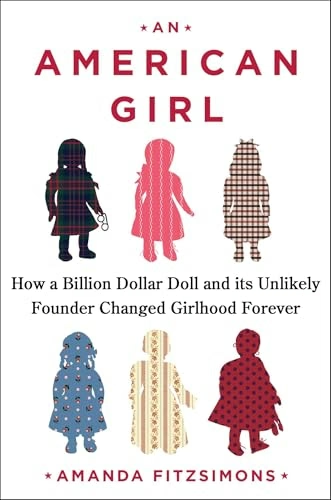
Amanda FitzSimons's An American Girl: How a Billion-Dollar Doll and Its Unlikely Founder Changed Girlhood Forever attempts something genuinely ambitious—telling the untold story of Pleasant Rowland's revolutionary toy empire and its seismic impact on American girlhood. The book succeeds brilliantly at celebrating the visionary business acumen behind American Girl dolls while simultaneously exposing the brand's complicated relationship with diversity, class, and historical representation. Yet this nonfiction narrative stumbles in execution, raising serious questions about research rigor that undermine its credibility as authoritative business history.
Quick Verdict
This is a compelling cultural history that captures why American Girl mattered—but it's marred by factual errors that prevent it from being the definitive account it aspires to be. FitzSimons writes with genuine passion and provides valuable context about third-wave feminism and consumer culture's intersection with childhood, but readers seeking rigorous business journalism will find themselves frustrated.
What This Book Actually Does
An American Girl is structured as a love letter to Pleasant Rowland's entrepreneurial genius and the dolls themselves. FitzSimons traces the brand's origin story—how Rowland disrupted a male-dominated toy industry by creating eighteen-inch dolls with rich historical backstories, quality craftsmanship, and educational narratives that treated young girls as intelligent consumers of culture.
The book explores how American Girl became a cultural touchstone by simultaneously launching dolls, companion novels, magazines, and accessories as an integrated ecosystem rather than treating each product as separate. This "multi-pronged approach" was genuinely radical in the 1980s toy industry, where companies typically relied on single flagship products (think Barbie or Cabbage Patch Kids).
Beyond the business narrative, FitzSimons examines American Girl's complicated legacy regarding race, class, and representation. She discusses Addy Walker's groundbreaking introduction as the line's first Black doll, while also critiquing the brand's aspirational pricing that positioned American Girl dolls as luxury items inaccessible to many families—a tension that persists today.
Where the Book Excels
FitzSimons captures something real about American Girl's cultural dominance across four decades. Her analysis of how the brand shaped girlhood through historical narratives is genuinely insightful—these weren't just toys, they were gateways to understanding American history through a female perspective. For millennials who grew up poring over American Girl catalogs and books, this book validates that obsession while explaining why the brand commanded such fierce loyalty.
The business strategy section is particularly strong. Rowland's insistence on meticulous quality control, from doll construction to the paper quality of companion books, wasn't perfectionism for its own sake—it was brand differentiation in a crowded market. FitzSimons effectively argues that this attention to detail is what separated American Girl from competitors and created a product worth premium pricing.
The cultural context is also well-researched. FitzSimons situates American Girl within third-wave feminism, the rise of aspirational consumer culture, and evolving debates about historical accuracy in children's media. These frameworks help readers understand why American Girl resonated so powerfully with 1990s and 2000s girlhood.
Where It Falls Apart
Here's where An American Girl review discussions get heated: readers have identified substantial factual errors throughout the narrative. These aren't minor typos or date mistakes—they're fundamental inaccuracies about the content of American Girl books themselves, the brand's timeline, and key business decisions.
The most damaging criticism is that FitzSimons appears not to have thoroughly engaged with the source material she's analyzing. If you're writing the definitive history of American Girl's cultural impact, you need to have actually read the books in detail. When readers catch multiple factual errors per chapter about content they know intimately, it raises serious questions about the author's research methodology and editorial oversight.
Additionally, some of FitzSimons's characterizations of Rowland feel unnecessarily snide. She occasionally portrays the founder as domineering or unreasonably meticulous, without sufficient evidence that these personality traits were problematic rather than simply necessary for building a multimillion-dollar company. There's a difference between rigorous criticism and editorializing.
The book also makes sweeping accusations about American Girl being "hypocritical, insincere, and frivolous" without providing the reporting depth to support these claims. Critical analysis requires evidence; emotional charges require investigation. An American Girl sometimes conflates the two.
Comparing to Similar Works
If you've read The Making of American Girl, FitzSimons's book offers a different lens—less design-focused, more business-and-culture-focused. That's valuable. However, The Making of American Girl appears to have stronger editorial standards, which matters when you're claiming to tell the "real story" of a beloved brand.
For business narrative, this falls somewhere between Barbie: The Icon, the Image, the Ideal (which examines toy culture through a feminist lens) and Built in America: Secret Histories of American Buildings (which traces how design choices reflect cultural values). FitzSimons's ambitions are similar to these works, but her execution is less rigorous.
Who Should Read This
Perfect for: Former American Girl enthusiasts who want to understand the brand's business genius and cultural impact. Readers interested in how consumer products shape childhood identity. Anyone curious about female entrepreneurs disrupting male-dominated industries. People exploring the intersection of feminism, capitalism, and children's culture.
Will be frustrated by: Readers expecting journalistic rigor and fact-checked reporting. Anyone seeking a definitive, error-free history of American Girl. People who value meticulous sourcing and citation in nonfiction. Researchers looking for a reliable reference work.
The Verdict
An American Girl captures something true about why this brand mattered—and still matters—to generations of girls. FitzSimons writes with genuine affection for her subject while maintaining critical distance about its contradictions. The cultural analysis is thoughtful, and the business strategy section offers real insights.
But factual errors undermine the entire project. You cannot write definitive cultural history with substantial inaccuracies about your primary subject. Is An American Girl review-worthy? Yes—but with significant caveats. Read it for the cultural context and business framework, but verify claims that matter to you. It's a good book compromised by research that needed another round of editorial rigor.
Final Score: 6.5/10
Brilliant cultural analysis sabotaged by factual sloppiness that prevents it from being the authoritative account it deserves to be.