Category:
Book ReviewsA Welcome Reunion Review: Psychological Terror in 60 Pages
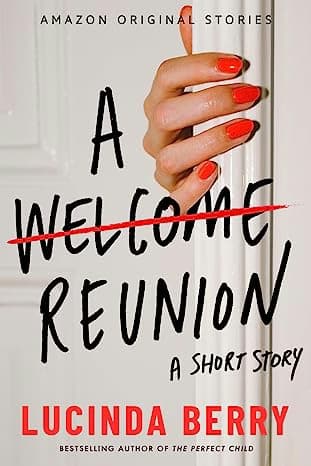
Prices can sometimes be lower on bigger marketplaces, but this link helps independent bookstores and local reading communities.
Quick Verdict
A Welcome Reunion by Lucinda Berry is a relentless psychological thriller that proves you don't need 400 pages to burrow under your skin. This novella transforms a simple premise—an adopted child returns as an adult—into something genuinely unsettling. Berry's clinical background as a psychologist weaponizes the narrative with authentic detail about sociopathic behavior, making this domestic nightmare feel disturbingly plausible. The 3.53-star rating on major platforms masks a polarizing read: some readers found it unforgettable; others felt the abbreviated format left crucial questions unanswered.
What It's About
Hannah and Christopher Bauer adopted Janie years ago, hoping to save a traumatized child. Instead, they got something far more dangerous: a young sociopath whose destructive behavior nearly shattered their family. Now eighteen and freshly released from juvenile detention, Janie has reinvented herself. She's published a tell-all memoir, built an Instagram following, and changed her name to Hope. She claims reformation. She wants reconciliation. The Bauers know better.
What makes this premise work is the reversal of power. Janie isn't desperate or broken anymore—she's confident, articulate, and weaponizing her own trauma narrative for public sympathy. When the Bauers refuse to meet with her, she doesn't fade away. She escalates. The former social worker assigned to her case suddenly makes disturbing revelations about Janie's calculated manipulation, and the family realizes they're not facing a broken teenager seeking help. They're facing a predator who's learned to talk like a victim.
The Setup Problem: Do You Need to Read The Perfect Child First?
This novella is technically a sequel to The Perfect Child, Berry's 2018 novel. Readers who jumped in without that context had mixed experiences. Some found the backstory sufficient—Berry provides enough exposition to understand the Bauers' terror. Others felt they were missing crucial psychological depth about Janie's original behavior patterns.
Here's the honest take: you can read this standalone, but you'll miss the full impact. Imagine watching the second half of a psychological documentary without the first. You'll understand what's happening, but not why it matters so much. If you're committed to this story, read The Perfect Child first. If you're testing the waters, this novella works as a tense introduction to Berry's particular brand of domestic horror.
Writing & Style: Clinical Precision Meets Pulp Tension
Berry's background in clinical psychology becomes immediately apparent. She doesn't write Janie as a cartoonish villain or a misunderstood antihero. Janie is written with the precise, calculated movements of someone who understands human psychology better than most therapists. The prose is clean and efficient—no wasted descriptions, no purple prose. Every sentence either advances the plot or reveals character.
The pacing is relentless. At roughly 60 pages, there's no room for subplot tangents or character meandering. Berry strips away everything except the core tension: a family bracing for an attack they can't predict. This economy of storytelling is both a strength and a limitation. The tightness creates genuine momentum. But it also means character development gets sacrificed for plot velocity.
The dialogue crackles with subtext. When Janie reaches out to the Bauers, her words are carefully chosen—humble on the surface, threatening underneath. When Hannah and Christopher discuss their options, every conversation is shadowed by the knowledge that Janie is smarter than they are. Berry understands that the scariest moments in domestic thrillers aren't physical violence—they're the recognition that someone is playing chess while you're playing checkers.
What Works: The Psychological Authenticity
The strongest element of this A Welcome Reunion review has to address what genuinely disturbs. Berry doesn't rely on jump scares or graphic violence for shock value. Instead, she explores how a sociopath with a public platform can weaponize victim narratives. Janie's memoir becomes a tool—it establishes her as sympathetic in the public eye while simultaneously tormenting the family she hurt. This is terrifyingly contemporary.
The social worker subplot is particularly effective. When Piper reveals Janie's calculated behavior patterns, it transforms the threat from abstract anxiety into concrete danger. We're not just worried Janie will do something; we're learning about specific, documented instances of her manipulation. This grounding in psychological detail elevates the story beyond typical domestic thriller territory.
The characterization of Hannah and Christopher also deserves credit. They're not action heroes or brilliant strategists. They're middle-aged parents trying to protect their family from someone smarter and more ruthless than they are. Their desperation feels earned. Their mistakes feel inevitable. By the final act, when they're forced to make impossible choices, the weight of those decisions lands because we understand exactly how trapped they are.
What Doesn't Work: The Ending and Format Constraints
Here's where readers divide sharply. Multiple reviewers noted that the first 75 percent is absolutely gripping—edge-of-seat, can't-put-it-down material. Then the ending arrives, and the novella format suddenly feels like a limitation rather than a strength.
Without spoiling specifics, the resolution is somewhat ambiguous. Some readers appreciated this nebulous quality—it mirrors real life's lack of neat conclusions. Others felt cheated. A full-length novel would have allowed for more exploration of the psychological aftermath, more examination of how the family processes what happened, more clarity about Janie's ultimate fate.
The novella format also means character arcs compress. Secondary characters like the social worker and the Bauers' adult children get sketched rather than developed. You want more time with these people, more insight into how Janie's presence affects different family members. Instead, everything is filtered through Hannah's perspective, which creates tunnel vision.
There's also a tonal question worth raising: does Berry's clinical approach sometimes undercut emotional resonance? The precision that makes the psychological elements credible can also create distance. We're analyzing Janie's behavior rather than feeling the family's terror. It's a trade-off, and not every reader will accept it.
Who Should Read This
Perfect for: Thriller readers who are tired of the same domestic suspense formulas. Fans of psychological character studies. People who appreciate clinical detail about mental illness and manipulation. Anyone who's read The Perfect Child and wants more. Readers who prefer tight, economical storytelling over sprawling narratives. People interested in how social media and memoir culture can be weaponized.
Skip if: You need clear resolutions and tidy endings. You prefer action-driven plots over psychological tension. You want graphic violence or physical confrontations. You're squeamish about child abuse or family trauma. You need a full-length novel to feel satisfied. You dislike unreliable or morally complex characters.
Comparisons to Similar Thrillers
If you've read Sharp Objects by Gillian Flynn, you'll recognize Berry's interest in how trauma creates monsters. Both authors understand that the most dangerous people are often those who've been hurt themselves. However, Berry's approach is more clinical and less literary—this is pulp psychology rather than literary fiction.
Compared to We Need to Talk About Kevin by Lionel Shriver, this novella is far more plot-driven and less philosophically ambitious. Shriver spends 400 pages interrogating parental guilt and nature-versus-nurture. Berry uses 60 pages to create pure suspense. Different goals, both executed competently.
The Verdict: Is A Welcome Reunion Worth Reading?
Yes, but with caveats. This is worth reading if you value psychological tension over plot complexity, if you appreciate Berry's clinical precision, and if you're willing to accept an ambiguous ending. It's a genuinely unsettling novella that proves domestic horror doesn't require length—it requires understanding how to make readers fear the people closest to the protagonist.
The 3.53-star rating reflects legitimate disagreement about whether the format serves the story or constrains it. That's fair criticism. The novella does feel slightly truncated. But within its constraints, Berry delivers something rare: a thriller that's both psychologically credible and genuinely disturbing.
Lucinda Berry's A Welcome Reunion is the kind of book that stays with you not because of what happens, but because of what it reveals about how manipulation works, how systems fail to protect us from dangerous people, and how the people we love most can become our greatest threat.
Final Score
7.5/10 — A taut, psychologically astute thriller that sacrifices character depth for relentless pacing, ultimately delivering more questions than answers.