Category:
Book ReviewsA Time of Witches Review: Haunting But Uneven
Quick Verdict
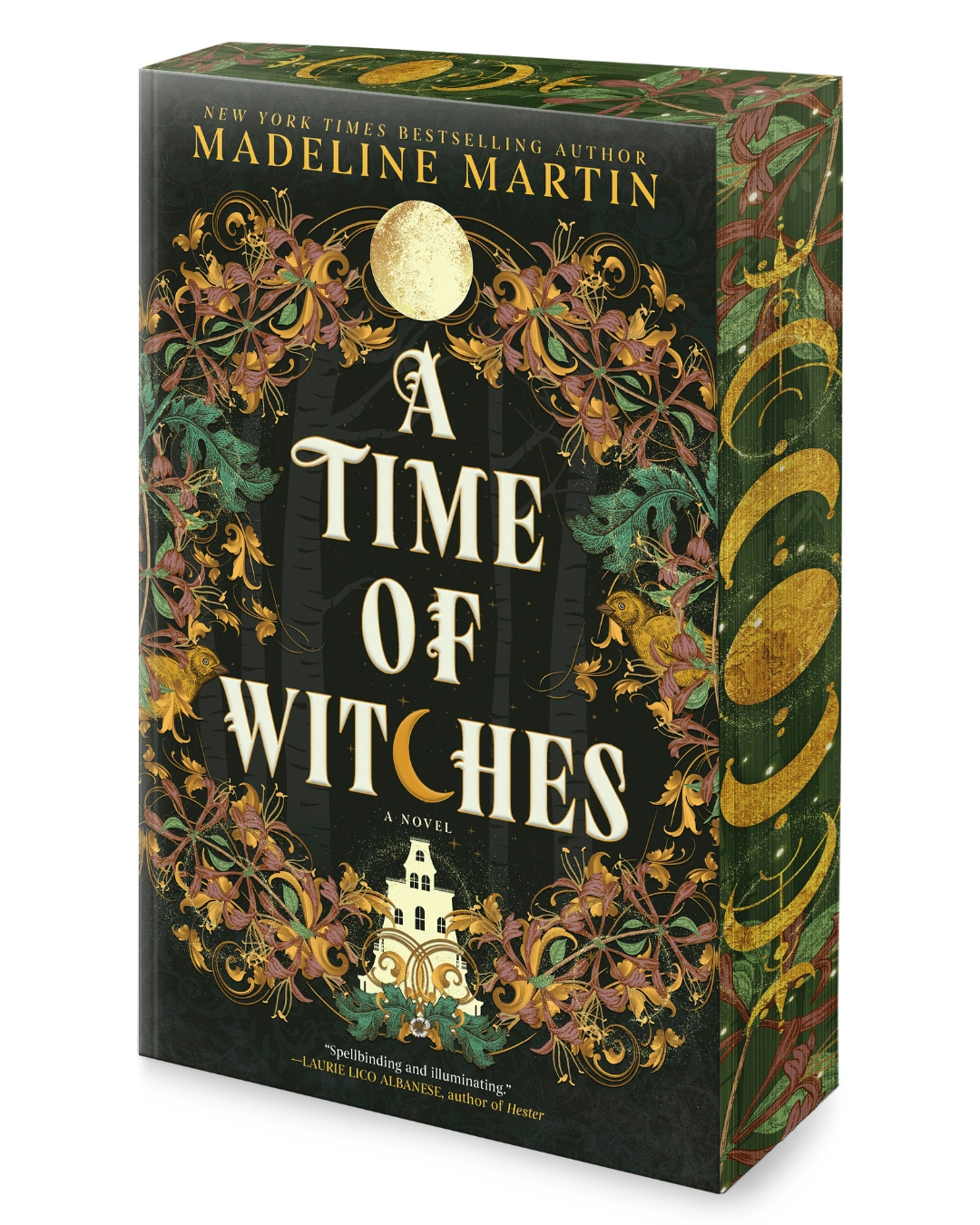
A Time of Witches by Madeline Martin is an ambitious dual-timeline supernatural thriller that delivers visceral historical horror but stumbles when it pivots to its modern-day narrative. The 1645 Suffolk storyline—depicting a widow accused of witchcraft during the height of persecution—is genuinely gripping and darkly atmospheric. The contemporary Savannah-to-England mystery, however, feels comparatively weightless, creating a tonal whiplash that prevents this book from reaching the heights of its potential.
What It's About
Madeline Martin's latest novel weaves two interconnected stories across nearly four centuries. In the present day, Lilith Legare is experiencing unexplainable phenomena following her mother's death: plants respond to her touch, animals gravitate toward her, and a birthmark on her arm burns with inexplicable intensity. Plagued by recurring nightmares of being burned at the stake, she abandons her unraveling life in Savannah to investigate her family history in England, eventually arriving at the crumbling Brackenmere Manor.
The parallel narrative transports readers to 1645 Suffolk, where Sybil Brantham—an educated, independent widow who inherited substantial wealth—becomes a target for persecution. As hysteria spreads through her community, Sybil finds herself accused of witchcraft, blamed for her husband's death and various misfortunes. What unfolds is a harrowing portrait of how patriarchal fear transforms into systematic violence against women who refuse to be silenced or controlled.
The two timelines are bound by blood and betrayal, with Lilith and Sybil connected through a legacy that spans generations. The central tension: can Lilith uncover the truth about her ancestor before she becomes consumed by the same curse that threatened Sybil centuries before?
The Historical Storyline Carries the Weight
The strongest element of this A Time of Witches review must acknowledge where Martin truly excels: the 1645 narrative is genuinely haunting. The depiction of witch trial imprisonment is unflinching and brutal—starving, interrogation, torture, humiliation, and psychological torment rendered with uncomfortable specificity. These scenes feel researched and earned, not sensationalized for effect.
Martin captures the particular vulnerability of women like Sybil: educated, wealthy, and therefore threatening to men whose power depends on female compliance. The historical context feels authentic to the period without becoming a textbook. Sybil's internal conflict—protecting her younger sister Jacinda while watching her own humanity stripped away—generates genuine emotional stakes.
The audiobook narration by Saskia Maarleveld intensifies this timeline's impact, sustaining a sense of dread that makes the witch trial sequences feel claustrophobic and immediate. This is where the novel earns its reputation as a bestseller.
Where the Modern Timeline Falters
The significant weakness in Madeline Martin's A Time of Witches emerges when the narrative returns to Lilith's contemporary investigation. Her storyline lacks the visceral urgency of Sybil's imprisonment. A mysterious birthmark and plant-related phenomena simply cannot compete with the threat of execution for generating reader investment.
Lilith's journey from Savannah to Brackenmere Manor reads more like a cozy mystery than a supernatural thriller. The pacing becomes glacial as she slowly pieces together family secrets that most readers will anticipate well before the reveals arrive. The modern-day stakes—inheritance disputes, family curses, identity questions—feel abstract compared to Sybil's immediate physical danger.
The transitions between timelines compound this problem. Cutting from Sybil's torture scene to Lilith puzzling over dusty documents creates jarring tonal shifts that break narrative momentum rather than building suspense. Readers who become emotionally invested in the 1645 storyline often find themselves impatient to return to it, which is a fundamental structural issue.
The Supernatural Elements Need Sharper Definition
Martin leaves the magical system deliberately ambiguous—is Lilith actually experiencing supernatural phenomena, or are these manifestations of grief and stress? This ambiguity works initially as a source of tension, but the book never commits to a satisfying answer. The birthmark tingles, plants respond, animals linger—yet these moments feel more like atmospheric window dressing than genuine magical threat.
Compare this to the clarity of historical persecution: Sybil faces concrete, documented dangers. Lilith's supernatural inheritance remains nebulous. For readers seeking a paranormal thriller, this vagueness disappoints. For those wanting psychological realism, the magical elements distract without deepening the narrative.
Writing Quality and Pacing
Martin's prose is accessible and engaging, particularly in dialogue and internal monologue. Her depiction of emotional states—grief, fear, determination—resonates authentically. However, the novel's pacing is uneven. The historical sections move with inexorable momentum toward tragedy, while the contemporary narrative meanders through investigation scenes that could be compressed without losing essential information.
The book runs approximately 400+ pages, but it could be tightened by 80-100 pages without sacrificing substance. The modern-day mystery requires tighter plotting to match the tension of the historical narrative.
Who Should Read This Book
Perfect for:
- Historical fiction enthusiasts, especially those interested in witch trials and women's history
- Readers who appreciate dark, atmospheric storytelling with feminist themes
- Fans of dual-timeline narratives who prioritize historical authenticity over modern-day plotting
- Audiobook listeners who respond to immersive narration and sustained tension
- Anyone seeking substantive exploration of how patriarchal systems weaponize fear against independent women
Will Likely Disappoint:
- Paranormal romance readers expecting stronger supernatural worldbuilding and romance elements
- Plot-driven thriller fans who want consistent pacing throughout
- Readers seeking equal narrative weight across both timelines
- Those who prefer mystery novels with intricate, twisty reveals
- Anyone uncomfortable with graphic depictions of torture and persecution
Comparing to Similar Works
If you've read The Invisible Life of Addie LaRue by V.E. Schwab, you'll recognize Martin's dual-timeline structure and supernatural inheritance plot. However, Schwab's narrative maintains more consistent momentum across both time periods. Alternatively, if you enjoyed Circling the Sun by Paula McLain or The Nightingale by Kristin Hannah, you'll appreciate Martin's commitment to historical detail, though those novels deliver more cohesive emotional arcs.
For pure witch trial fiction, The Scarlet Letter remains the gold standard for exploring how communities weaponize women's perceived difference. Martin's approach is less literary but more visceral in its depiction of institutional violence.
Is A Time of Witches Worth Reading?
Yes—but with caveats. The novel is absolutely worth reading if you're drawn to historical fiction exploring witch persecution and women's agency in patriarchal systems. The Sybil timeline alone justifies the investment, and Martin's research is evident throughout. The book became a bestseller across multiple platforms for good reason: it taps into contemporary conversations about silenced voices and institutional misogyny while delivering atmospheric historical storytelling.
However, don't expect a perfectly balanced dual-timeline narrative or a paranormal thriller with consistent momentum. Manage your expectations around the contemporary storyline, and you'll find genuine value in what Martin achieves. This is a book that works better when you accept its uneven structure as intentional rather than flawed—the historical narrative is meant to dominate.
Final Score
7/10 — A Time of Witches excels at historical horror and feminist themes but sacrifices narrative balance to do so, making it a compelling but frustratingly uneven reading experience.