Category:
Book ReviewsA Marriage at Sea Review: Gripping Yet Uneven
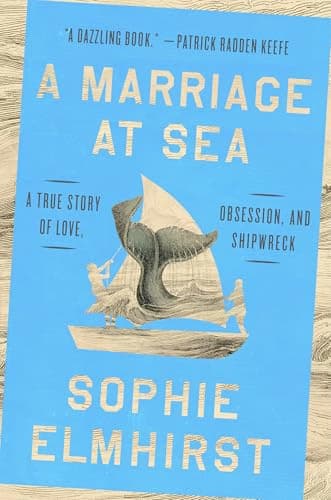
Prices can sometimes be lower on bigger marketplaces, but this link helps independent bookstores and local reading communities.
Quick Verdict
Sophie Elmhirst's A Marriage at Sea tells a genuinely extraordinary true story—two ordinary people surviving 118 days adrift in the Pacific after a whale strike—but struggles to translate that survival drama into consistently compelling narrative. The book is undeniably ambitious and occasionally brilliant, yet it stumbles under the weight of its own premise, leaving readers divided on whether spectacle alone justifies the pages devoted to repetitive hardship.
What This Book Is Really About
Maurice and Maralyn Bailey weren't adventurers or seasoned sailors. They were ordinary 1970s suburbanites suffocating under the weight of mortgage payments, oil crises, and the crushing predictability of English middle-class life. Their radical solution: sell everything, build a boat, and sail toward New Zealand and reinvention. It's a compelling premise on its own—the kind of impulse many of us fantasize about but never execute.
Then comes the collision. A whale strikes their boat. The vessel sinks. They're cast onto a tiny inflatable raft with minimal supplies, 1,000 miles from the nearest shipping lane, in one of the planet's most unforgiving environments. What follows is a meditation on survival, love under impossible pressure, and the divergent ways two people respond to existential crisis.
Elmhirst's framing is clever: she positions this as much a story about human connection as about maritime disaster. The whale strike is the catalyst, not the climax. The real drama, she suggests, plays out in the psychological and emotional dimensions of being trapped together when escape is impossible.
The Narrative Architecture Problem
Here's where A Marriage at Sea reveals its fundamental tension. The shipwreck—the event that justifies the entire book's existence—occurs roughly 60% through the narrative. This means readers spend the first half following Maurice and Maralyn's backstory, their decision-making, their boat construction, and their departure from England. These chapters establish character and motivation, which matters. But they also feel glacially paced for anyone who picked up this book expecting immediate maritime peril.
Once the raft ordeal begins, Elmhirst faces an authenticity problem that no amount of literary skill can entirely solve: survival at sea is, by its nature, repetitive. Day after day consists of rationing water, catching fish, managing weather, and enduring physical deterioration. These details are genuinely interesting for perhaps 50 pages. Extended across 150+ pages, the narrative becomes what the survival itself must have felt: monotonous, grinding, occasionally punctuated by genuine danger but mostly defined by waiting.
What Elmhirst Gets Right
The character work is sophisticated. Maurice emerges as a genuinely complex figure—not a hero, but a man whose introversion and emotional guardedness become both asset and liability when facing catastrophe. Maralyn, conversely, possesses the kind of relentless optimism and practical ingenuity that keeps them alive. Rather than presenting this as a simple binary (she's strong, he's weak), Elmhirst shows how their differences create both friction and interdependence.
The historical context enriches the narrative considerably. Framing their escape attempt against 1970s economic collapse and social malaise gives their decision weight beyond mere adventure-seeking. They weren't running toward something; they were running from something real. This grounding makes the story feel less like an exotic anomaly and more like an extreme expression of recognizable human yearning.
Elmhirst's prose, when it's working, captures both the mundane and the transcendent. There are moments—Maurice observing the whale's eye before impact, Maralyn rationing their last fresh water—where the writing achieves genuine poignancy. These passages remind us why this story matters beyond its sensational surface.
Where the Narrative Falters
The most glaring structural issue: the book doesn't know what it wants to be after the rescue. The raft section concludes around the 60% mark, leaving 40% of the book to address aftermath, recovery, and reflection. This extended denouement feels obligatory rather than organic. Readers who came for survival drama find themselves in territory that resembles memoir more than adventure narrative—and not particularly gripping memoir at that.
Moreover, there's a tonal inconsistency that undermines emotional investment. Elmhirst oscillates between intimate psychological portraiture and journalistic documentation. When she's inside Maurice's deteriorating mental state or Maralyn's desperate problem-solving, the narrative breathes. When she's cataloging food rations, water consumption, or marine biology, it reads like a technical manual. These modes don't always integrate seamlessly.
There's also the question of what the book excludes. Environmental readers will find themselves uncomfortable with passages describing marine life as food source. Animal welfare concerns aren't engaged with directly; they're simply present in the narrative, creating an undercurrent of discomfort that the book never quite acknowledges.
Who Should Read This
Perfect for: Readers interested in true survival stories with psychological depth. Those who loved In the Heart of the Sea or Endurance will find similar appeals here. Book club participants seeking character-driven discussion material. Anyone fascinated by 1970s social history and what drives people to radical life changes. Memoir enthusiasts willing to tolerate uneven pacing for genuine emotional stakes.
Will frustrate: Readers expecting relentless action and forward momentum. Those seeking a straightforward survival thriller should know this book moves deliberately and spends significant time on internal states rather than external drama. Environmental advocates may struggle with the book's treatment of marine life. Anyone with limited patience for repetition in narrative structure.
The Polarization Problem
The stark divide in reader response to this book isn't accidental. Some readers find the extended survival section hypnotic—a meditation on endurance that mirrors the experience itself. Others find it tedious. Some appreciate the psychological complexity; others feel it slows momentum unnecessarily. Some see the post-rescue section as essential reflection; others view it as padding.
This isn't a failure of the book so much as evidence that A Marriage at Sea occupies an awkward middle ground. It's too literary for pure adventure readers, too plot-driven for experimental memoir enthusiasts, too focused on individual psychology to function as straightforward historical narrative. It's reaching for multiple audiences and fully satisfying none of them.
Writing Style and Craft
Elmhirst's prose is competent and occasionally elegant, but it's rarely the draw here. She favors clarity over stylistic flourish, which serves the material well—we need to understand survival logistics, and ornate writing would undermine credibility. Her strength lies in dialogue and intimate observation rather than descriptive language. The book reads more like accomplished journalism than literary fiction, which is appropriate given its nonfiction foundation.
The structure itself is the most interesting stylistic choice: weaving between past and present, between Maurice's internal experience and Maralyn's actions, between intimate moments and broader historical context. When this technique works, it creates genuine resonance. When it doesn't, it feels like Elmhirst is juggling too many narrative threads simultaneously.
Historical Context and Relevance
What makes A Marriage at Sea timely isn't just that it was selected as a major nonfiction book of 2024. It arrives during a cultural moment obsessed with escape narratives—digital detoxes, quiet quitting, radical life pivots. The Baileys' decision to abandon conventional life feels less like 1970s eccentricity and more like a blueprint that resonates with contemporary audiences. This cultural resonance may explain the book's strong mainstream reception despite its narrative limitations.
The whale strike itself carries symbolic weight in our current moment. Nature doesn't care about human plans or desires. Catastrophe arrives randomly, indifferently. In an era of climate anxiety and unpredictable disruption, the Baileys' story feels like an inadvertent parable about human vulnerability and adaptation.
The Verdict
A Marriage at Sea is worth reading if you understand what you're getting: a character-driven account of extraordinary circumstances rendered through a deliberately literary lens. It's not a page-turner in the conventional sense, but it's a book that asks interesting questions about love, survival, and what we're willing to endure for connection and freedom.
Is A Marriage at Sea review essential reading? That depends on your tolerance for uneven pacing and your appetite for psychological depth over constant action. The story itself is remarkable. Elmhirst's execution is competent but flawed. The result is a book that will captivate some readers completely while frustrating others who feel it doesn't fully justify its ambitions.
Final Score: 6.5/10
A genuinely remarkable true story told with ambition and occasional brilliance, but undermined by structural choices that prioritize scope over narrative momentum, resulting in a book that's frequently compelling yet ultimately uneven.