Category:
Book ReviewsA Labyrinth of Honeybees Review: Dense Magic in 44 Pages
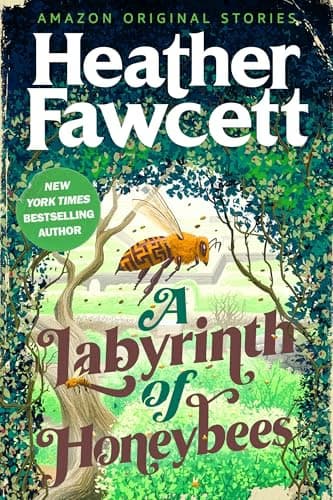
Heather Fawcett's A Labyrinth of Honeybees is a deceptively ambitious short story that proves you don't need 400 pages to construct a fully realized fantasy world. This 44-page novella delivers intricate worldbuilding, religious intrigue, and a murder mystery wrapped in atmospheric tension—but whether it satisfies depends entirely on what you want from a story this size.
Quick Verdict
A Labyrinth of Honeybees review reveals a polished gem that excels at atmosphere and conceptual depth while stumbling slightly on pacing and narrative payoff. If you loved Fawcett's Emily Wilde series, this is worth your time. If you prefer plot-driven mysteries with surprising twists, you may find it frustratingly restrained.
What This Story Actually Is
The premise is deceptively simple: an inquisitor arrives at a remote mountain temple to investigate two murders and a missing heir. His subject is the priestess who tends the sacred garden, keeps the temple's honeybees, and guards the labyrinthine hedge maze at its heart. What unfolds is less a conventional whodunit and more a slow-burn exploration of power, faith, and resistance.
The genius of Fawcett's A Labyrinth of Honeybees lies in what it doesn't explain. We never learn the characters' names. We're never given explicit details about the conquest that has reshaped the land. Instead, these absences become the story's greatest strength—they force you to read between lines, to understand that some mysteries resist neat solutions.
The Setting Steals Every Scene
This is where A Labyrinth of Honeybees truly distinguishes itself. Fawcett constructs a temple complex that feels lived-in and sacred without ever becoming precious. The gardens, waterfalls, and mountain vistas aren't mere decoration—they're extensions of the priestess's faith and her resistance to conquest.
The maze itself deserves particular mention. It's presented as genuinely unsolvable unless the goddess permits passage. This isn't fantasy window-dressing; it's a philosophical statement about agency, divine will, and the limits of rational inquiry. The inquisitor, representing the new order's logical authority, cannot simply solve the maze through cleverness. The old gods have their own rules.
The contrast between the lush, organic landscape and the sterile demands of the occupying power creates genuine tension without a single action sequence. This is restraint used as a weapon.
Where the Writing Excels
Fawcett's prose here is deliberately calm, almost meditative. The priestess guides the inquisitor through the temple grounds with apparent cooperation, and this surface civility masks deeper currents of defiance. The dialogue never becomes exposition-heavy; instead, it reveals character through what remains unsaid.
The portrayal of religion stands out as particularly sophisticated. The old faith is rooted in the land itself—in specific places, specific practices, specific relationships with nature. It's not about doctrine but about continuity and belonging. This contrasts sharply with the foreign religion that "seeks to conquer violently," which operates through abstract authority rather than lived experience.
For a 44-page story, this thematic depth is remarkable. Fawcett trusts her readers to grasp the ideological stakes without spelling them out.
What Doesn't Quite Land
Here's where A Labyrinth of Honeybees review gets honest: the ending escalates abruptly. The final revelation, while satisfying on an intellectual level, lacks the surprise that would make it genuinely shocking. Readers with any mystery experience will likely predict the twist before it arrives.
Some will also find the restraint frustrating rather than elegant. The story prioritizes atmosphere and worldbuilding over plot momentum. If you're reading for a page-turner, you'll feel the pacing drag. The mystery elements, while present, take a backseat to the exploration of competing faiths and imperial occupation.
The brevity, which enables the story's elegance, also limits its emotional depth. We never quite know the priestess well enough to feel the full weight of her choices. A longer novella might have given her interior life the space it deserves.
The Comparison That Matters
If you've read N.K. Jemisin's The City We Became or enjoyed the political sophistication of Ninth House by Leigh Bardugo, you'll recognize Fawcett's approach: using fantasy elements to explore power dynamics and resistance. But where those novels build through escalation, A Labyrinth of Honeybees operates through restraint. It's closer in spirit to a literary short story that happens to contain magic than to a traditional fantasy mystery.
Who Should Actually Read This
Perfect for: Fans of Heather Fawcett's existing work (this is an auto-buy if you loved Emily Wilde). Readers who appreciate atmospheric worldbuilding over plot twists. Anyone interested in stories about cultural resistance and religious faith. Short story enthusiasts who want substantial ideas in compact packages. People who enjoy mysteries that prioritize mood over revelation.
Will likely disappoint: Plot-driven mystery readers expecting genuine surprises. Readers who find predictable twists frustrating. Anyone who struggles with understated narratives. Those seeking high-stakes action or dramatic confrontation. Readers who need explicit character names and backstory to feel invested.
The Bigger Picture
A Labyrinth of Honeybees arrives as part of Amazon's Magic & Mystery collection, a curated series of novellas from established fantasy authors. It's worth noting that this story demonstrates why Fawcett has become an auto-buy author for many readers—her ability to create immersive worlds and explore complex themes in any length is genuinely rare.
The novella format suits her particular gifts. She doesn't need 500 pages to make you believe in a world. She needs atmosphere, careful worldbuilding, and thematic clarity. Here, she delivers all three.
The Final Verdict
A Labyrinth of Honeybees is a beautifully constructed story that knows exactly what it is: a meditation on faith, resistance, and the limits of authority wrapped in a murder mystery. It's not trying to be the next major fantasy epic. It's trying to be perfect at being a short story, and it nearly succeeds.
The atmosphere is genuinely transporting. The worldbuilding is sophisticated without being confusing. The writing is controlled and elegant. The ending, while predictable, serves the story's thematic concerns.
Is A Labyrinth of Honeybees worth reading? Yes—but with clear eyes about what you're getting. You're not getting a plot-driven mystery with shocking revelations. You're getting a carefully constructed exploration of power, faith, and resistance in a beautifully imagined setting. If that appeals to you, this novella will stay with you long after you finish it.
Final Score: 7.5/10
A polished, thematically rich novella that excels at atmosphere and worldbuilding but sacrifices plot momentum and emotional surprise in service of restraint.