Category:
Book ReviewsA Forsaken Prophecy Review: Brilliant But Brutally Uneven
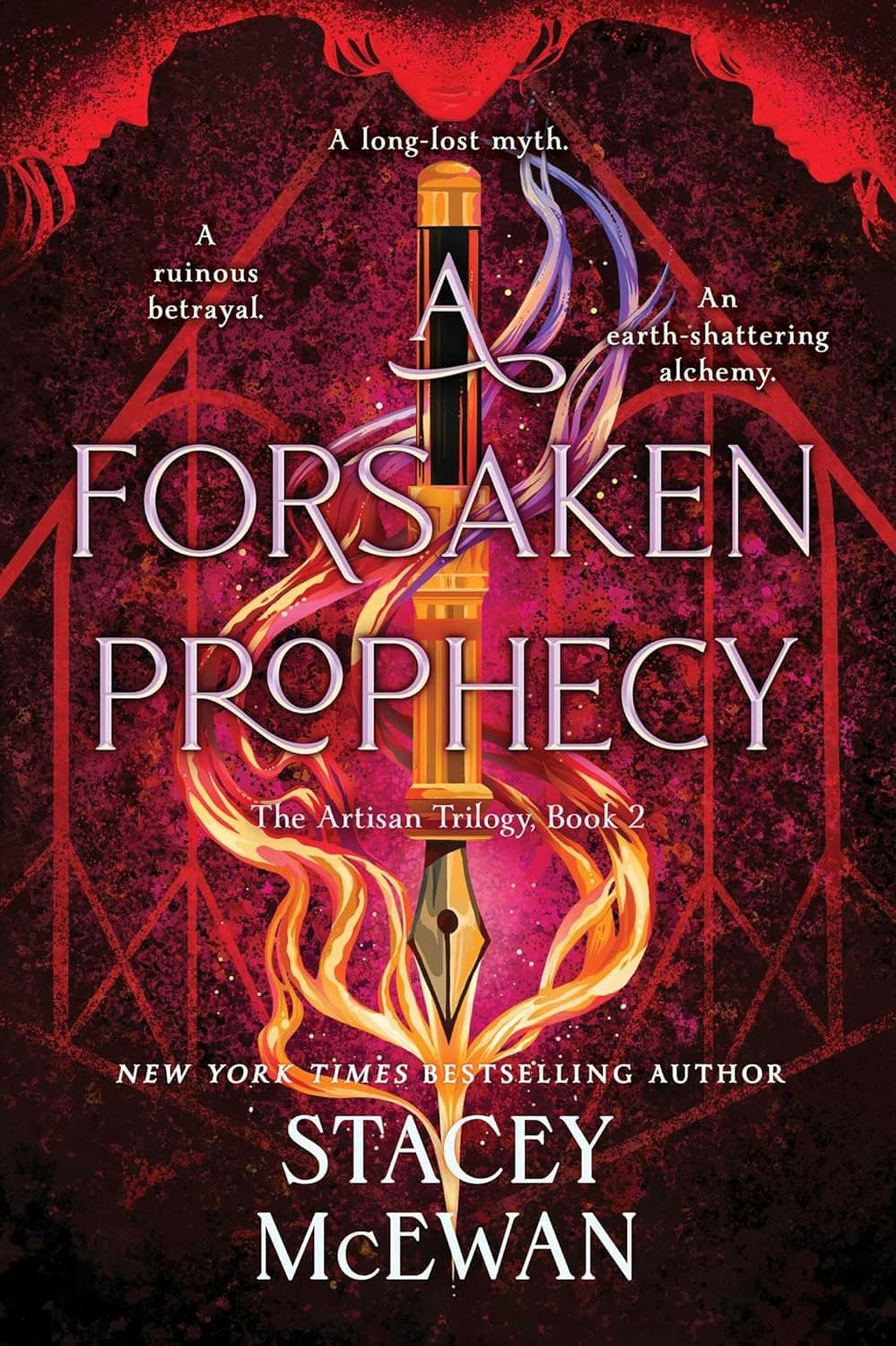
Prices can sometimes be lower on bigger marketplaces, but this link helps independent bookstores and local reading communities.
Quick Verdict
A Forsaken Prophecy by Stacey McEwan is a sequel that sharply divides readers—and for legitimate reasons. While some hail it as a masterclass in romantic tension and world-building expansion, others find it a slog through muddy pacing that squanders the momentum of its predecessor. The truth lies somewhere between these extremes: this is an ambitious, occasionally stunning follow-up that struggles with structural inconsistency and fails to justify its length.
What It's About
Stacey McEwan's sequel plunges Patrick Colson—the last Alchemist—and Nina, the world's only earth Charmer, into a war between the Artisans and Craftsmen that feels increasingly personal. Captured and separated from his rebel union, Patrick must navigate betrayal, reunion with his imprisoned father, and a perilous alliance with Nina's ex-lover Theo. The trio pursues a prophecy pointing toward an infinite supply of idium, the magical currency that could tip the war's balance. Across fractured Craftsman towns and underground tunnel networks, they hunt for answers while enemies close in.
It's the setup for an epic continuation. Whether it delivers is where readers fundamentally disagree.
The Pacing Problem That Defines This Book
Let's address the elephant in the room: A Forsaken Prophecy review discussions consistently circle back to one issue—pacing. The book struggles with momentum in its opening third, a critical problem for a 400+ page sequel. Where A Forbidden Alchemy (the first book) moved with propulsive energy, this installment meanders. Readers who devoured book one find themselves rereading passages three weeks later, unable to recall what happened. That's not a minor flaw; it's a structural failure.
The irony is that the content isn't necessarily bad—it's that nothing seems to happen for far too long. Character moments that could land in five pages stretch across twenty. World-building exposition, while occasionally interesting, often interrupts momentum rather than enhancing it. For a romantasy that promises both high stakes and emotional intensity, the early chapters feel like spinning wheels.
What Actually Works: Character Depth and Tension
When McEwan's A Forsaken Prophecy finds its footing, it's genuinely compelling. Patrick emerges as the book's emotional anchor—a character whose loyalty to his family and town rivals the complexity of Tommy Shelby from Peaky Blinders. His internal conflict between loving Nina and hating what she's done creates real, cutting tension. The man kneels before her like a damned acolyte while simultaneously questioning whether forgiveness is possible. That's character work worth reading.
The romantic throughline, once it kicks in, justifies the romantasy label. McEwan captures something true about love existing alongside betrayal—two damaged people trying to piece themselves back together on a foundation of broken glass. The yearning, the banter, the moments where a glance becomes dangerous—these sequences remind you why readers connected with book one.
Theo's presence as a complicating factor adds genuine stakes. This isn't a love triangle resolved in chapter three; it's a messy reality where first loves don't simply vanish, where loyalty and desire tangle in ways that can't be neatly untangled.
World-Building That Expands and Engages
The underground tunnel networks connecting Craftsman towns represent the book's best world-building innovation. Rather than keeping readers confined to a single setting, McEwan uses geographical expansion to deepen lore. We learn more about magic's origins, the history of the Artisans versus Craftsmen conflict, and the mythology surrounding idium. These revelations feel earned rather than dumped.
The secondary cast—Polly, John, Rose—gain dimension in ways that suggest McEwan is playing a longer game with this series. The character work here suggests genuine care for a world that extends beyond the central romance.
The Twist Problem: Execution Over Innovation
Multiple readers mention "insane twists," and they're not wrong—the book delivers genuine surprises. But here's the critical distinction: having twists isn't the same as executing them well. Some land with impact; others feel like narrative conveniences designed to salvage flagging momentum. The prophecy's revelation, for instance, carries weight, but only because readers have invested so heavily in the characters by that point—not because the setup was particularly elegant.
Who Should Read This Book
Perfect for: Readers who were absolutely obsessed with A Forbidden Alchemy. If you loved Patrick and Nina's dynamic, the high-stakes magic system, and the blend of romantasy with gritty, morally complex characters, you'll likely overlook the pacing issues because you're invested in where the story goes. BookTok fans and readers who prioritize emotional payoff over structural perfection will find plenty to love here.
Skip it if: You enjoyed book one but weren't obsessed with it. If you value tight plotting, consistent pacing, and books that respect your time, this sequel may frustrate you. Readers who DNF books regularly or who have limited reading time should know that this demands patience before it rewards it. This isn't a book you can casually dip in and out of; it requires commitment.
Approach cautiously if: You're new to the series. A Forsaken Prophecy isn't a standalone, and while it can technically be read after book one, it assumes deep familiarity with character dynamics and world-building. Start with A Forbidden Alchemy first.
The New York Times Bestseller Effect
It's worth noting that A Forbidden Alchemy's success as a New York Times bestseller created enormous expectations for this sequel. That pressure is palpable. McEwan appears to have expanded her scope significantly—more characters, more locations, more plot threads—but hasn't always tightened her execution accordingly. This is a common trap for successful debuts: the urge to go bigger can override the discipline that made the first book work.
Comparing to Similar Romantasy
If you've read The Shadows Between Us or similar romantic fantasy, you know the formula: enemies-to-lovers dynamics, morally gray characters, high stakes. A Forsaken Prophecy plays in this space but with more grit and complexity than many comparable titles. The magic system feels more grounded, the political conflict more consequential. However, it lacks the relentless pacing of tighter romantasy entries—books that understand that emotional intensity requires structural momentum.
The Ending Question
One reader mentioned that the ending is "really good" but questioned whether it justifies the slow journey. This touches something real: A Forsaken Prophecy does build toward a climax that recontextualizes earlier events. If you make it to the final act, you'll likely feel the payoff was worth the wait. But that's a conditional promise, and not every reader will have the patience to collect on it.
Final Verdict
A Forsaken Prophecy by Stacey McEwan is a sequel that works better in memory than in real-time reading. The character development is genuine, the romantic tension earned, and the world-building ambitious. But it's also bloated, occasionally directionless, and demands more patience than it initially justifies. Is A Forsaken Prophecy worth reading? Yes—but with caveats. If you're a devoted fan of book one, you'll find enough here to keep you invested. If you're a casual reader, you might find yourself wading through mud to reach the good parts.
Final Score: 6.5/10 — Compelling characters and genuine emotional stakes elevate this above mediocrity, but structural issues and pacing problems prevent it from reaching the heights of its predecessor.