Category:
Book Reviews1666 Review: A Harrowing Testament to Indigenous Survival
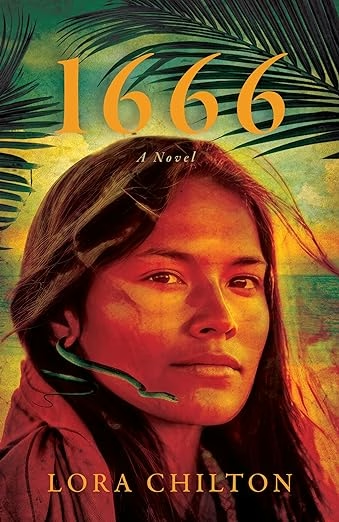
Prices can sometimes be lower on bigger marketplaces, but this link helps independent bookstores and local reading communities.
Lora Chilton's 1666 is a historical fiction novel that demands to be read with unflinching attention, even when—especially when—the narrative becomes almost unbearable. This is not a comfortable book. It's a necessary one.
Chilton, herself a member of the Patawomeck tribe, has crafted a fictional retelling of one of American history's most deliberately erased stories: the 1666 massacre and enslavement of her ancestors. The novel follows three Indigenous women through the decimation of their tribe by English colonists, their forced transport to Barbados aboard slave ships, and their eventual escape back to Virginia. What makes this 1666 review essential reading is that Chilton doesn't sanitize this history—she forces you to witness it.
What This Book Actually Accomplishes
The central achievement of 1666 lies in its structural brilliance. Chilton alternates between two temporal worlds: the flourishing, peaceful existence of the Patawomeck before colonization, and the horrors that followed. This isn't a narrative gimmick—it's a devastating rhetorical strategy. By showing readers the fullness of what was lost, Chilton transforms the violence from abstract historical atrocity into personal tragedy.
The novel is grounded in rigorous research. Chilton drew from oral tribal traditions, interviews with tribal elders, colonial records, and extensive study of Patawomeck language. This scholarly foundation gives the work an authenticity that elevates it beyond typical historical fiction. The inclusion of Indigenous names and Patawomeck words throughout the narrative honors a culture that colonization attempted to erase entirely.
The three female protagonists are unforgettable precisely because they're rendered as fully human—not symbols, not victims, but women with agency, fear, love, and determination. Their survival and eventual return to Virginia is the reason the Patawomeck tribe exists today, a fact that transforms personal narrative into tribal legacy.
Where the Writing Falters
Yet 1666 review discussions reveal a genuine weakness: narrative voice. Multiple readers noted that the three female protagonists sound remarkably similar, making it difficult to distinguish between them without relying on context clues. In a novel built on intimate POV shifts, this is a significant misstep. The emotional distance that results undermines the visceral power the story should deliver.
Additionally, some cultural details—while beautifully researched—occasionally read as informational dumps rather than organic narrative elements. Readers encounter passages where the author's scholarly background shows too prominently, threatening to interrupt the story's momentum. The line between honoring cultural specificity and maintaining narrative flow isn't always cleanly navigated.
The Graphic Content Question
This is where 1666 becomes polarizing. The novel contains unflinching depictions of sexual violence, torture, starvation, and brutality aboard slave ships. This isn't gratuitous—every violent scene serves the historical record and emotional truth. But it's also genuinely difficult to read.
The question isn't whether the content is appropriate; the question is whether you're prepared for it. Readers seeking a gentler entry into Indigenous history or colonial American narratives should look elsewhere. This book doesn't flinch, and neither should its readers. The violence is the point—it's what actually happened, and Chilton refuses to let readers escape into comfortable ignorance.
Historical Context That Matters
Most Americans know about the Trail of Tears or Wounded Knee, but the Patawomeck story remains almost entirely unknown outside tribal communities. The Potomac River itself is named after this tribe, yet colonial records mention them only until 1669, then silence. Governor's Council records from 1666 explicitly called for the tribe's "utter destruction if possible." This wasn't accidental erasure—it was deliberate.
Chilton's fictional approach allows her to imagine the interior lives and experiences that colonial documents never recorded. This is historical fiction doing what it does best: filling the gaps that official history leaves behind, not with invention, but with plausible human truth grounded in surviving evidence.
Who Should Read This, and Who Shouldn't
1666 is essential reading for anyone genuinely interested in American history beyond the sanitized version taught in schools. It's powerful for readers of historical fiction who want narratives that challenge rather than comfort. Fans of works like The Nightingale or All the Light We Cannot See will recognize Chilton's commitment to historical authenticity, though her approach is notably more unflinching.
Do not read this if graphic depictions of sexual violence trigger you without warning. Do not read this if you want a redemptive narrative arc that resolves neatly. Do not read this if you're looking for entertainment—this is literature with a purpose, and that purpose is bearing witness.
For educators, tribal members, and readers committed to understanding the true history of North America, 1666 is non-negotiable.
The Verdict
Lora Chilton's 1666 is a significant work of historical fiction that prioritizes truth over comfort. While the narrative voice could be sharper and some cultural details more seamlessly integrated, these technical limitations don't diminish the book's essential importance. This is a story that needed to be told, and Chilton tells it with the rigor and emotional honesty it deserves.
Is 1666 worth reading? Yes—precisely because it's difficult. The best historical fiction doesn't let us remain passive observers. Chilton demands that we witness, remember, and reckon with a history deliberately erased from American consciousness.
Final Score: 8/10 — A powerful, historically grounded narrative that sacrifices some stylistic refinement for the sake of unflinching truth-telling.